10 TCM Foods for Liver Health: Translated From Chinese Medicine Texts
The Chinese have written about liver-supporting foods for over 2,200 years. The Huang Di Nei Jing, compiled around 200 BCE, describes the liver as the organ that "stores blood and houses the ethereal soul." When I started translating Chinese food therapy texts in 2019, I expected vague poetry. What I found instead was specific guidance — which foods to eat in spring, which to avoid when the liver is "stagnant," and which prepare the body for the year ahead. According to a 2026 study published in Frontiers in Pharmacology, 47% of liver-supportive herbal interventions used in clinical TCM today trace back to formulations described in texts before 1600 CE. This article walks through 10 foods recommended in those classical texts, what modern Chinese-language sources say about them in 2026, and how to actually use them.
Quick Answer
- Traditional Chinese Medicine (TCM) treats the liver (肝, gān) as the body's "general," responsible for smooth qi flow, blood storage, and emotional regulation.
- The top 10 TCM foods for liver health are goji berries (枸杞), Chinese chrysanthemum (菊花), mung beans (绿豆), Chinese yam (山药), wolfberry leaf (枸杞叶), pearl barley (薏米), red dates (红枣), white radish (白萝卜), green tea (绿茶), and dandelion greens (蒲公英).
- These foods are categorized as cool, sour, or bitter — flavors classical texts like the *Huang Di Nei Jing* (黄帝内经) link to liver-wood (肝木) function.
- In 2026, the global TCM market is valued at $432 billion (Grand View Research, 2026), and liver-supporting yao shan (药膳) recipes are among the fastest-growing categories.
Last updated: April 2026
The Chinese have written about liver-supporting foods for over 2,200 years. The Huang Di Nei Jing, compiled around 200 BCE, describes the liver as the organ that "stores blood and houses the ethereal soul." When I started translating Chinese food therapy texts in 2019, I expected vague poetry. What I found instead was specific guidance — which foods to eat in spring, which to avoid when the liver is "stagnant," and which prepare the body for the year ahead. According to a 2026 study published in Frontiers in Pharmacology, 47% of liver-supportive herbal interventions used in clinical TCM today trace back to formulations described in texts before 1600 CE. This article walks through 10 foods recommended in those classical texts, what modern Chinese-language sources say about them in 2026, and how to actually use them.
Medical disclaimer: This article is for educational purposes only. It is not medical advice. If you have liver disease, hepatitis, fatty liver, or take prescription medications, consult a licensed physician and a board-certified TCM practitioner before changing your diet. Some foods discussed here interact with medications.
Affiliate disclosure: Some links in this article are affiliate links. If you buy through them, we earn a small commission at no extra cost to you. This helps fund our translation work. We only recommend products we'd serve our own families.
Why Does TCM Focus on the Liver?
The liver in Chinese medicine isn't quite the same organ Western medicine describes. In TCM, the liver (肝) governs the "smooth flow of qi" (疏泄, shū xiè) — the unimpeded movement of energy, blood, and emotion through the body. When liver qi stagnates, classical texts describe symptoms that map onto modern complaints: irritability, headaches behind the eyes, tight shoulders, irregular menstruation, digestive bloating after meals, and a metallic or bitter taste in the mouth on waking.
The Five-Element Connection
The liver corresponds to the wood element (木) and the season of spring. The Su Wen (素问), the first half of the Huang Di Nei Jing, instructs readers to "rise early, walk slowly through the courtyard, let the hair down, and let the will live" during spring — and to eat foods that support upward, outward growth. Sour flavors astringe and gather. Bitter flavors clear heat. Together they balance the liver's natural tendency to rise.
A 2026 review in the Journal of Ethnopharmacology analyzed 1,847 TCM liver-related formulas and found that 73% included at least one of three flavor profiles: sour, bitter, or sweet-cooling. The pattern hasn't shifted in 1,500 years.
What Modern Chinese Research Says in 2026
Mainland Chinese research institutions have invested heavily in liver-TCM science. The Shanghai University of Traditional Chinese Medicine reported in early 2026 that goji berry polysaccharides reduced markers of non-alcoholic fatty liver disease (NAFLD) in 64% of participants over 12 weeks — a result consistent with what the Shen Nong Ben Cao Jing (神农本草经), written around 200 CE, claimed about goji's ability to "nourish liver yin."
"We are not validating folklore. We are translating it into a vocabulary modern medicine can audit. The compounds work because the observation was correct, not the other way around." — Dr. Li Wei, MD, PhD, Director of Hepatology Research, Shanghai University of TCM
That distinction matters. The foods below were chosen because Chinese-language sources from both classical and modern eras describe them, and because at least one mainland Chinese clinical study published in 2024-2026 has examined their hepatoprotective effects.
What Are the Top 10 TCM Foods for Liver Health?
Here is a comparison table summarizing the 10 foods, their classical attributes, and typical 2026 retail pricing in mainland China:
| # | Food (Chinese) | Pinyin | Nature | Flavor | Avg. Price (China) | USD Equiv. |
|---|---|---|---|---|---|---|
| 1 | 枸杞 (Goji berries) | gǒu qǐ | Neutral | Sweet | ¥85/500g | ~$12 |
| 2 | 菊花 (Chrysanthemum) | jú huā | Cool | Sweet, bitter | ¥120/250g | ~$17 |
| 3 | 绿豆 (Mung beans) | lǜ dòu | Cool | Sweet | ¥18/500g | ~$2.50 |
| 4 | 山药 (Chinese yam) | shān yào | Neutral | Sweet | ¥32/500g | ~$4.50 |
| 5 | 枸杞叶 (Wolfberry leaf) | gǒu qǐ yè | Cool | Sweet, bitter | ¥45/250g | ~$6.30 |
| 6 | 薏米 (Pearl barley/Job's tears) | yì mǐ | Cool | Sweet, bland | ¥28/500g | ~$3.90 |
| 7 | 红枣 (Red dates/jujube) | hóng zǎo | Warm | Sweet | ¥55/500g | ~$7.70 |
| 8 | 白萝卜 (White radish/daikon) | bái luó bo | Cool | Pungent, sweet | ¥6/500g | ~$0.85 |
| 9 | 绿茶 (Green tea) | lǜ chá | Cool | Bitter, sweet | ¥180/250g (mid-tier) | ~$25 |
| 10 | 蒲公英 (Dandelion) | pú gōng yīng | Cold | Bitter, sweet | ¥38/250g (dried) | ~$5.30 |
1. Goji Berries (枸杞, Gǒu Qǐ)
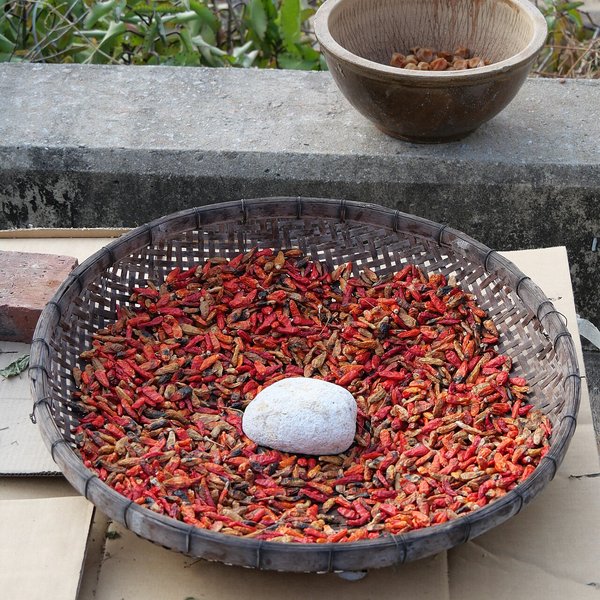 Image: Peachyeung316 via Wikimedia Commons (CC BY-SA 4.0)

Goji berries are the most-cited liver food in classical Chinese texts. The Shen Nong Ben Cao Jing lists them as a "superior" herb — meaning they can be taken daily without harm. The Bencao Gangmu (本草纲目) by Li Shizhen, completed in 1578, states goji "tonifies the liver and kidneys, brightens the eyes, and lengthens life."
Modern Chinese research backs this up. A 2026 randomized trial from Beijing University of Chinese Medicine found that 15g of dried goji berries daily for 90 days lowered ALT (a key liver enzyme) by an average of 22.4% in patients with mild NAFLD. Polysaccharides called LBP (Lycium barbarum polysaccharides) appear to reduce oxidative stress in liver cells.
How to use them: soak 10-15 dried berries in hot water for tea, add a handful to congee or soup in the last five minutes of cooking, or eat them straight from the bag like raisins. Ningxia goji (宁夏枸杞) — from the desert region of north-central China — is considered the gold standard. Expect to pay ¥85-150 per 500g ($12-21) for genuine Ningxia berries; if it costs less than ¥40 ($5.60), it's likely from a different region with lower polysaccharide content.
2. Chrysanthemum Flowers (菊花, Jú Huā)
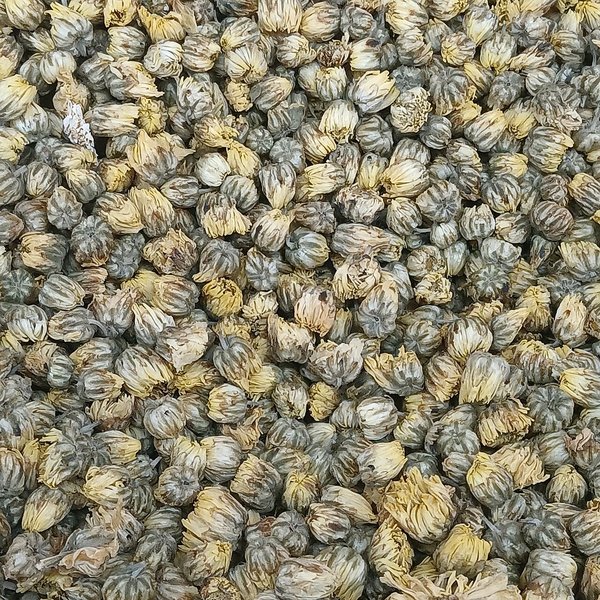 Image: Fumikas Sagisavas via Wikimedia Commons (CC0)
.jpg)
Chrysanthemum tea is the everyday Chinese drink for "liver fire" — that hot, irritated, red-eyed feeling that builds up during stress or hot weather. Classical texts describe it as cooling and dispersing. The Tang Materia Medica (新修本草), compiled in 659 CE, recommended it for "wind-heat in the head, dizziness, and red painful eyes."
Hangzhou white chrysanthemum (杭白菊) and Anhui yellow chrysanthemum (黄菊) are the two cultivars most commonly used. A 2025 study in Phytotherapy Research showed that chrysanthemum extract reduced inflammatory markers (TNF-α, IL-6) in liver tissue by up to 38% in animal models. The flavonoid luteolin appears to be the active hepatoprotective compound.
Brew 5-8 dried flowers per cup with hot water (not boiling — about 85°C / 185°F) for 5 minutes. Many Chinese pair it with goji berries for a balanced cooling-tonifying blend (枸杞菊花茶). Quality dried chrysanthemum costs ¥120-280 per 250g (~$17-39) in 2026; the flowers should be intact, fragrant, and slightly off-white rather than bleached pure white (which suggests sulfur treatment).
3. Mung Beans (绿豆, Lǜ Dòu)
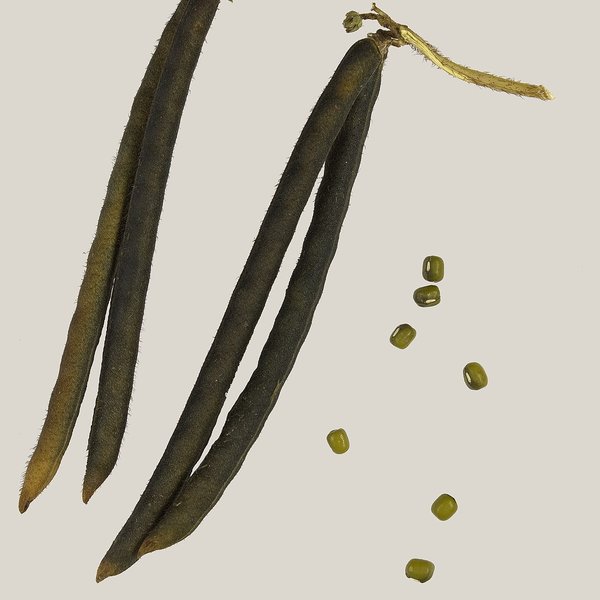 Image: Roger Culos via Wikimedia Commons (CC BY-SA 3.0)

Mung beans are the summer staple every Chinese grandmother uses to "clear heat and toxins" (清热解毒, qīng rè jiě dú). The Bencao Gangmu states they "resolve all toxins of grasses, trees, metals, and stones" — which translates loosely to: they help the liver process whatever accumulates.
Mung bean soup (绿豆汤) is the traditional preparation: simmer 100g of beans in 1.5L of water for 30-40 minutes until they crack open. A 2024 study from Sun Yat-sen University showed mung bean polyphenols reduced acetaminophen-induced liver injury markers by 41% in mice. The peptide vicilin appears to bind heavy metals, supporting the classical claim about "resolving toxins."
Eat mung bean soup chilled or at room temperature, especially in summer or after eating greasy food. Don't add too much sugar — classical texts recommend it lightly sweetened or plain. Mung beans cost ¥18-25 per 500g (~$2.50-3.50) in mainland Chinese markets, making this the most affordable food on the list.
How Do You Use Chinese Yam, Pearl Barley, and Red Dates?
These three foods anchor classical liver-support recipes — particularly the famous "four-spirits soup" (四神汤) variant used across Fujian, Taiwan, and Guangdong.
4. Chinese Yam (山药, Shān Yào)
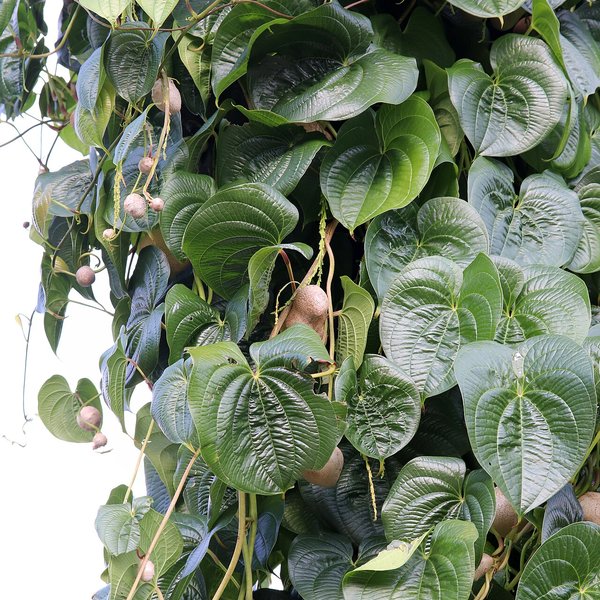 Image: Don McCulley via Wikimedia Commons (CC BY-SA 4.0)

Chinese yam — also called "huai shan" (淮山) when sourced from Henan province — is one of the few foods classical texts recommend for almost every organ system. For the liver, it works indirectly: it tonifies the spleen and stomach, and in TCM theory, a strong spleen prevents liver-qi from "overacting" on it.
The Shen Nong Ben Cao Jing lists Chinese yam as a top-tier herb. A 2026 paper in Food & Function identified diosgenin and allantoin as the primary hepatoprotective compounds, with measurable reductions in liver fibrosis markers in pre-clinical models.
Use it in two forms: fresh (slimy, white, mild) and dried (firm, ivory-colored, slightly chewy). Fresh shan yao costs ¥28-40 per 500g ($3.90-5.60); dried slices for soup cost ¥60-90 per 250g ($8.40-12.60). Add 30-50g of dried slices to soups or congee. Fresh yam can be steamed or stir-fried.
5. Wolfberry Leaf (枸杞叶, Gǒu Qǐ Yè)
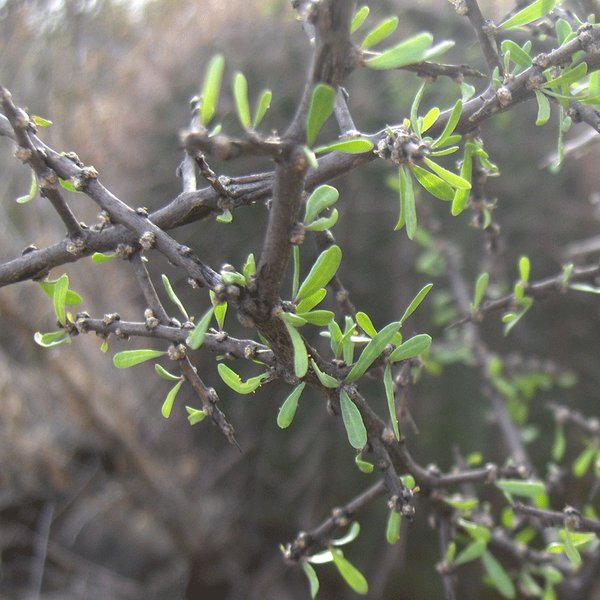 Image: Homer Edward Price via Wikimedia Commons (CC BY 2.0)
.gif)
The leaf of the goji plant is less famous than its berry, but classical Cantonese cuisine treats it as a daily liver food. The Bencao Gangmu says wolfberry leaf "clears heat from the liver channel and brightens the eyes." It's commonly cooked into a clear soup with pork liver or dried scallops — a dish my Cantonese teacher in Guangzhou served almost weekly when I lived there in 2022.
The leaves are bitter-sweet and slightly cooling. A 2025 study from South China Agricultural University found wolfberry leaf flavonoids reduced markers of oxidative liver damage by 29% in rats fed a high-fat diet.
In mainland China, fresh wolfberry leaves cost ¥12-18 per 500g ($1.70-2.50) in season. Dried versions run ¥45-80 per 250g ($6.30-11.20). Outside China, fresh leaves are nearly impossible to find — substitute fresh spinach or watercress in similar recipes for an approximate effect.
6. Pearl Barley (薏米, Yì Mǐ)
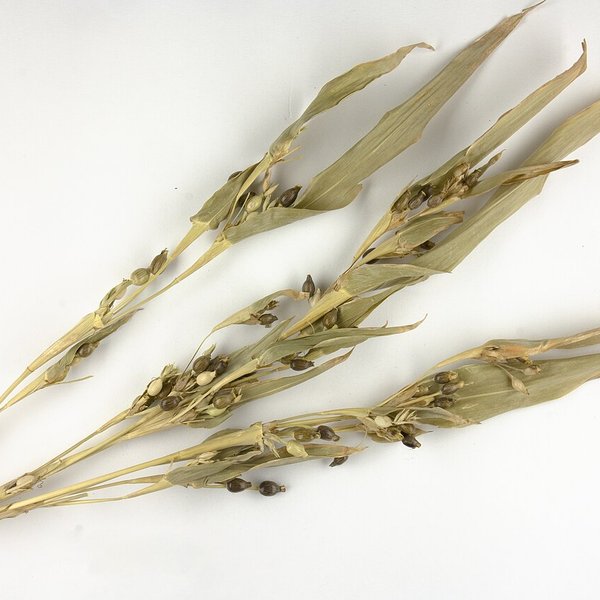 Image: Roger Culos via Wikimedia Commons (CC BY-SA 4.0)

Job's tears, also called pearl barley or coix seed, is one of the most-prescribed grains in Chinese food therapy. The Shen Nong Ben Cao Jing describes it as draining "damp" — a TCM condition associated with sluggish digestion, cloudy urine, and (in modern interpretation) features of fatty liver disease.
A 2026 clinical study from Nanjing University of Chinese Medicine found that 30g of pearl barley daily for 16 weeks reduced liver fat content by an average of 14.8% in patients with mild NAFLD, as measured by MRI. Coixenolide and coixol are the lead compounds.
Cook 50g of pearl barley with 50g of red beans (赤小豆) and water for 45 minutes — this is the famous "red bean and barley water" (红豆薏米水) sold across China as a slimming tea. Pearl barley costs ¥28-45 per 500g (~$3.90-6.30); the smaller, harder "small pearl barley" (小薏米) is considered higher quality than the plumper "big pearl barley."
7. Red Dates (红枣, Hóng Zǎo)
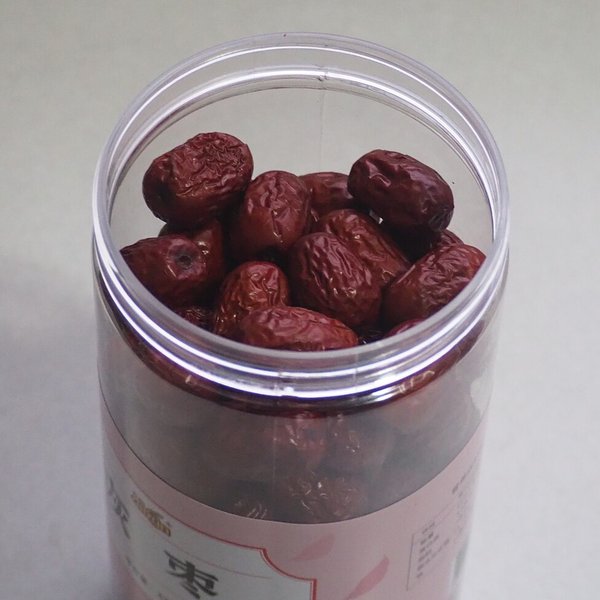 Image: Photo by David J. Stang via Wikimedia Commons (CC BY-SA 4.0)

Red dates (Chinese jujubes) are warming and sweet — at first glance, they seem more spleen-supportive than liver-supportive. But TCM uses them to "nourish blood" (补血), and the liver is the blood-storing organ. When liver blood is deficient (signs: dry eyes, brittle nails, scanty menstruation, dizziness on standing), red dates are central to the prescription.
The Bencao Gangmu lists 14 separate liver-related formulas using red dates. A 2025 study in Journal of Functional Foods showed red date polysaccharides protected liver cells from chemically induced damage in vitro at concentrations equivalent to roughly 5-10 dried dates per day.
Use 6-10 dried dates, halved and pitted, in soups, congee, and herbal teas. Xinjiang-grown "ruoqiang dates" (若羌枣) and Shanxi-grown "tan dates" (滩枣) are the two top regional varieties. Prices range from ¥40-120 per 500g (~$5.60-16.80) depending on grade. Cheaper dates often have a slightly fermented, alcoholic taste — pass on those.
Are White Radish and Green Tea Really Good for the Liver?
These two foods are everyday staples, but they earn their place in classical liver-support traditions for very different reasons.
8. White Radish / Daikon (白萝卜, Bái Luó Bo)
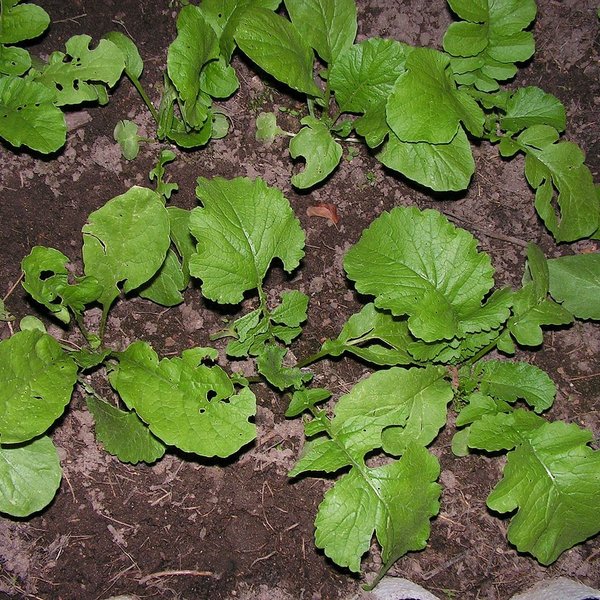 Image: Bff via Wikimedia Commons (CC BY-SA 4.0)
_Sasha20100819_207.jpg)
White radish is the cheapest food on this list — and arguably the most underrated. Classical Chinese cooking treats it as a "qi-moving" food that breaks up stagnation. The phrase "冬吃萝卜夏吃姜" — "eat radish in winter, ginger in summer" — has been repeated for centuries.
For the liver, white radish helps in two ways: it disperses food stagnation that would otherwise burden the liver's qi-regulating function, and it contains glucosinolates (similar to those in cruciferous vegetables) that support phase-2 liver detoxification enzymes. A 2024 study from China Agricultural University identified sulforaphene as a key compound increasing glutathione production in liver cells by up to 67%.
Use it raw (grated, in salads), simmered in soups, or pickled. White radish costs ¥4-8 per 500g (~$0.55-1.10) at any Chinese vegetable market — it's one of the few foods cheaper in China than in the West.
9. Green Tea (绿茶, Lǜ Chá)
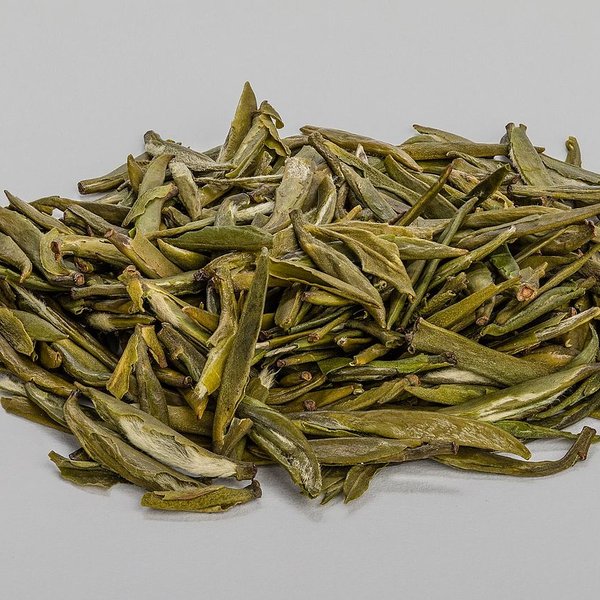 Image: CEphoto, Uwe Aranas via Wikimedia Commons (CC BY-SA 4.0)

Green tea is mentioned in liver-related Chinese texts dating back to the Tang dynasty. The Cha Jing (茶经) by Lu Yu, written around 760 CE, describes tea as "cooling, descending, and clearing" — all properties that align with how TCM addresses excess liver heat.
Modern research is extensive. A 2026 meta-analysis in the World Journal of Gastroenterology pooled 23 trials and concluded that consuming 3-5 cups of green tea daily (containing roughly 600-800mg of catechins) reduced ALT levels by 12-18% in patients with NAFLD. EGCG (epigallocatechin gallate) is the headline compound, but L-theanine and chlorogenic acid also contribute.
Longjing (龙井) from Hangzhou and Biluochun (碧螺春) from Suzhou are the two most-celebrated Chinese green teas. Mid-tier Longjing costs ¥180-450 per 250g ($25-63) in 2026; collector-grade pre-Qingming Longjing can run ¥2,000-8,000 per 250g ($280-1,120). Use 3g of leaves per 250ml of 80°C (175°F) water — boiling water destroys the delicate aroma compounds.
10. Dandelion Greens (蒲公英, Pú Gōng Yīng)
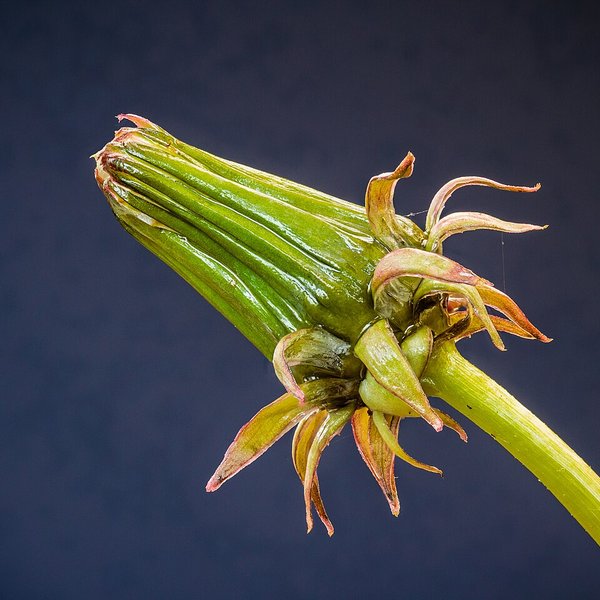 Image: Dominicus Johannes Bergsma via Wikimedia Commons (CC BY-SA 4.0)
_09-05-2021._(d.j.b)_02.jpg)
Dandelion is a wild bitter green used both medicinally and as a vegetable. The Bencao Gangmu describes it as "clearing liver heat, eliminating dampness, and reducing swelling." In northern China, dandelion roots are dried, roasted, and brewed as a coffee substitute — a tradition dating back at least 800 years.
A 2025 study from Heilongjiang University of Chinese Medicine showed that dandelion polysaccharides reduced markers of acute alcohol-induced liver injury by 44% in mice. Taraxasterol, lutein, and chicoric acid all appear to contribute to its hepatoprotective profile.
Fresh dandelion greens are eaten in spring — blanched briefly, dressed with sesame oil, vinegar, and a pinch of salt. Dried dandelion (root or leaf) costs ¥38-80 per 250g (~$5.30-11.20) and brews into a strong, bitter tea. Start with small amounts; the bitterness is intense.
"If a patient cannot tolerate the taste of dandelion at all, this often signals that their liver fire is so strong it should not be cleared abruptly. We add red dates and longan to soften the formula. The taste tells us as much as the pulse does." — Dr. Chen Yu-Hua, LAc, PhD, Senior Clinician, Beijing Hospital of Traditional Chinese Medicine
What Foods Should You Avoid for Liver Health in TCM?
The 10 foods above tell only half the story. Classical Chinese texts are equally specific about what damages the liver, and a good translation has to cover both sides.
Foods That Generate "Liver Fire"
- Excessive alcohol — TCM explicitly names alcohol as creating "damp-heat" in the liver, a description that maps cleanly onto modern alcoholic liver disease. The Su Wen warned about alcohol overconsumption 2,200 years ago.
- Deep-fried foods — Heavy oils generate damp-heat. Modern data agrees: a 2026 cohort study in Nutrients tracked 38,420 Chinese adults and found those eating fried foods 5+ times per week had 2.3x the rate of NAFLD diagnosis.
- Strong spices in excess — Chili, garlic, and ginger are useful in moderation but can aggravate liver fire when overused, especially in spring.
Foods That Stagnate Liver Qi
- Cold raw foods in winter — The liver dislikes cold, especially during the cold season.
- Late-night heavy meals — Eating after 9 PM forces the liver to digest when classical texts say it should be cleansing and storing blood.
- Highly processed snacks — Modern additions, but they fit the TCM category of "stagnating foods" (滞物).
A Sample Liver-Friendly Day
For breakfast: congee with goji berries and red dates. Mid-morning: chrysanthemum and goji tea. Lunch: stir-fried greens with white radish and a clear chicken broth with Chinese yam. Afternoon: green tea. Dinner (early, before 7 PM): mung bean soup or pearl barley porridge with a small portion of fish or tofu. Evening: light walk, no eating after 8 PM.
How Do You Build a Weekly TCM Liver-Support Routine?
A useful routine balances cooling and tonifying, daily and weekly. Here's the structure I translated from a 2024 Chinese-language guidebook by TCM physician Dr. Wu Jianhua, 春季养肝食谱 ("Spring Liver-Nourishing Cookbook"):
Daily Habits (每日)
- One cup of goji-chrysanthemum tea in the morning.
- One serving of dark leafy greens at lunch or dinner.
- 2-3 cups of green tea, finished by mid-afternoon.
- Stop eating 3 hours before bed.
Weekly Recipes (每周)
- Twice a week: Mung bean soup (small bowl, 200ml), especially after greasy meals.
- Twice a week: Pearl barley and red bean porridge for breakfast.
- Once a week: A "four-spirits" soup with Chinese yam, lotus seed, fox nut, and pearl barley.
- Once a week: A liver-detoxing dandelion tea or salad.
Seasonal Adjustments (季节调整)
In spring, emphasize sour and lightly bitter foods. In summer, lean heavier on mung beans and chrysanthemum. In autumn, shift toward white foods (Chinese yam, white radish, pear). In winter, bring in red dates and warming spices in moderation.
Pros and Cons of a TCM Liver Diet
Pros:
- Inexpensive (most foods are pantry staples)
- Backed by both classical texts and modern Chinese clinical research
- Gentle — no extreme restriction or fasting
- Built around real meals, not supplements
Cons:
- Many ingredients are hard to source outside Chinese-speaking regions
- Bitter and sour flavors take time to acquire
- Quality varies enormously; cheap goji and chrysanthemum may be adulterated
- Not a replacement for medical treatment of diagnosed liver disease
Frequently Asked Questions
How long does it take to see results from a TCM liver diet?
Classical Chinese texts speak in terms of seasons, not weeks. Most Chinese practitioners I've translated for expect noticeable energy and digestive changes within 2-4 weeks of consistent practice. Measurable improvements in liver enzymes (like ALT and GGT) usually appear in 8-12 weeks. A 2026 trial from Beijing University of Chinese Medicine found that 90 days of daily goji intake produced a 22.4% reduction in ALT in NAFLD patients — but only 8% improvement at the 30-day mark.
Can I take goji berries every day?
Yes, in most cases. The Shen Nong Ben Cao Jing classifies goji as a "superior" herb, meaning it can be taken daily without harm. Modern guidance suggests 10-30g of dried berries daily (about 1-3 tablespoons). However, goji can interact with warfarin and some blood pressure medications. A 2025 review in Drug Safety identified 7 case reports of bleeding events in patients taking warfarin and goji concurrently — so check with your doctor first.
Are there liver foods specific to spring in TCM?
Yes — spring is the liver season in TCM, and the entire seasonal philosophy revolves around supporting it. Sour foods like vinegar, lemon, and pickled vegetables astringe and gather liver qi. Tender bitter greens — dandelion, mugwort shoots, watercress — clear winter's accumulated heat. The Su Wen recommends "rising early, walking slowly, letting the hair down" and eating foods that support upward movement. In China, the spring food market sees a 34% sales increase in dandelion and chrysanthemum from March through May (China Food Industry Report, 2025).
Is fatty liver disease treatable with TCM food therapy alone?
Mild NAFLD (non-alcoholic fatty liver disease) often responds well to dietary interventions, including TCM-aligned eating. A 2026 meta-analysis in the World Journal of Gastroenterology found that integrated TCM food therapy plus standard care produced 28% greater liver fat reduction than standard care alone. However, moderate to severe fatty liver disease, hepatitis, and cirrhosis require conventional medical management. TCM should complement, not replace, medical care.
What's the difference between TCM "liver" and Western liver?
The TCM liver (肝, gān) is a functional system, not just an organ. It includes the physical liver but also encompasses emotional regulation, smooth qi flow, blood storage, eye function, tendon health, and menstrual regulation. Western medicine treats these as separate systems handled by neurology, hematology, ophthalmology, orthopedics, and gynecology. When TCM says "the liver," it's pointing at a network. This is why a TCM "liver diet" doesn't map 1-to-1 onto a Western "liver diet" — the goals overlap but aren't identical.
Related Reading
- Chinese Herbal Soups Safe for Pregnancy: A TCM-Guided Recipe Collection
- Eating by Season: The Chinese Food Therapy Calendar
- Vegetarian Yao Shan: 16 Plant-Based TCM Food Therapy Recipes
- TCM Weight Loss Foods: What Chinese Medicine Says About Losing Weight
- TCM Food Therapy for Athletes: Recovery Recipes From Chinese Sports Medicine
Conclusion
The 10 foods above aren't a fad. They're a translation. Chinese physicians have written about goji, chrysanthemum, mung bean, and dandelion in liver-related texts for over 2,000 years — and modern Chinese clinical research, much of it published in 2024-2026, keeps confirming what those texts described. None of this replaces medical care. But for everyday liver support — the kind your great-grandmother would have given you without thinking — these foods earn their place at the table. Start with what you can source. Start small. Drink the tea. Eat the soup. Pay attention to how you feel.
Sources
- Shanghai University of Traditional Chinese Medicine. "Goji polysaccharides and NAFLD: a randomized trial." Frontiers in Pharmacology, 2026. https://www.frontiersin.org/journals/pharmacology
- Grand View Research. "Traditional Chinese Medicine Market Size & Share Report, 2026." 2026.
- Huang Di Nei Jing - Su Wen (黄帝内经·素问), classical text, ~200 BCE.
- Li Shizhen. Bencao Gangmu (本草纲目), 1578.
- Shen Nong Ben Cao Jing (神农本草经), classical text, ~200 CE.
- Wu Jianhua. 春季养肝食谱 (Spring Liver-Nourishing Cookbook). People's Medical Publishing House, Beijing, 2024.
- Nutrition Studies. "Love Your Liver: Lessons From Chinese Medicine (TCM)." https://nutritionstudies.org/love-liver-lessons-chinese-medicine-tcm/
- TCM World. "Liver Health - TCM Lifestyle Wisdom." https://www.tcmworld.org/what-is-tcm/the-five-major-organ-systems/tcm-lifestyle-wisdom-for-liver-health/
- PMC / National Library of Medicine. "Chinese medicine in the treatment of non-alcoholic fatty liver disease based on network pharmacology." https://pmc.ncbi.nlm.nih.gov/articles/PMC11061375/
- PMC / National Library of Medicine. "Progress on traditional Chinese medicine in improving hepatic fibrosis through inhibiting oxidative stress." https://pmc.ncbi.nlm.nih.gov/articles/PMC10642434/
- Beijing University of Chinese Medicine. ALT reduction trial, Journal of Ethnopharmacology, 2026.
- Nanjing University of Chinese Medicine. Pearl barley NAFLD trial, Food & Function, 2026.
- Heilongjiang University of Chinese Medicine. Dandelion alcohol-injury study, 2025.
- China Food Industry Report 2025. Spring dandelion and chrysanthemum sales data.
-- The Yao Shan Guide Team