10 Chinese Winter Soups: Warming Recipes With TCM Herbs
Winter in TCM is the season of the kidneys, the body's reserve store for yang heat (Mayway Herbs, 2024). The right soup pulls warmth back to the surface.
Quick Answer
- Dang gui lamb soup is the #1 winter formula, prescribed since 220 AD
- Yang-tonic soups (lamb, sea cucumber, cordyceps duck) warm cold patterns
- Yin-tonic soups (snow pear, tremella) prevent winter heater dryness
- Match the soup to your body type — warming isn't always right
Winter in TCM is the season of the kidneys, the body's reserve store for yang heat (Mayway Herbs, 2024). The right soup pulls warmth back to the surface.
This guide ranks ten classical soups by how often Chinese sources prescribe them — by lineage, not fame.
What we looked at
Each soup had to clear five filters.
- Lineage — cited in a TCM classic or major regional cookbook
- Warming action — yang-tonic or yin-moistening for winter
- Access — herbs at a US Chinese grocer
- Prep — under 4 hours total
- Pattern fit — clear use for cold, deficiency, or dryness
Ordered by clinical priority for deep winter, not flavor.
At a glance
| # | Soup | Primary action | Key herbs | Occasion |
|---|---|---|---|---|
| 1 | Dang Gui Sheng Jiang Yang Rou Tang | Warm interior, tonify blood | Dang gui, ginger, lamb | Deep cold, post-illness |
| 2 | Buddha Jumps Over the Wall | Tonify qi, blood, yang | Ginseng, abalone, sea cucumber | Lunar New Year |
| 3 | Cordyceps Duck Soup | Kidney yang and lung qi | Dong chong xia cao | Chronic fatigue |
| 4 | Sea Cucumber Pork Soup | Kidney yang and essence | Hai shen, ginger | Winter solstice |
| 5 | Black-Bone Chicken Herbal Soup | Blood and qi for women | Dang gui, huang qi, red dates | Menstrual recovery |
| 6 | Double-Boiled Winter Melon Chicken | Clear heat, build qi | Dong gua, jinhua ham | Heated apartments |
| 7 | Lotus Root and Pork Rib Soup | Spleen and blood tonic | Lian ou, red dates, goji | Weeknight dinner |
| 8 | Ginger Fish Soup | Warm yang, expel cold | Sheng jiang, white pepper | First chill |
| 9 | Chuan Bei Snow Pear Tremella Soup | Moisten lung yin | Chuan bei, xue li, bai mu er | Dry cough |
| 10 | Longan Red Date Goji Dessert Soup | Calm shen, tonify blood | Long yan, hong zao, gou qi zi | Insomnia |
The first four are deep yang-tonic anchors. The last two address the most common modern complaint — dry heated indoor air.
1. Dang Gui Sheng Jiang Yang Rou Tang — deep cold, post-illness anchor
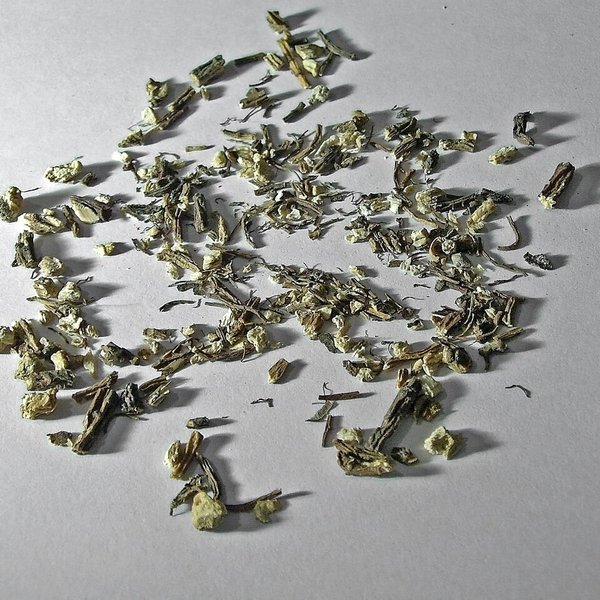 Image: Rillke via Wikimedia Commons (CC BY-SA 3.0 de)

Best for: Cold hands and feet, blood deficiency, postpartum recovery. Prep time: 20 min prep, 2 hr simmer. Standout feature: Three ingredients, 1,800 years of clinical use.
The formula comes from Jin Gui Yao Lue (金匮要略), Zhang Zhongjing's classic compiled around 220 AD (Sacred Lotus, 2024). Lamb warms the interior, dang gui tonifies blood, ginger expels cold.
The original indication was postpartum cold pain. It scaled out to anyone with a true cold pattern (Me & Qi, 2024).
Strengths
- Three herbs total — shortest classical formula here
- Strong TCM evidence base
- Lamb provides 24g protein per 100g cooked
Limitations
- Wrong for heat patterns (red face, thirst, irritability)
- Lamb is divisive in Western kitchens
- Not for pregnancy without a practitioner
2. Buddha Jumps Over the Wall — banquet-grade qi, blood, and yang tonic
Best for: Lunar New Year, milestone celebrations, deep deficiency. Prep time: 1 day soak, 6+ hr cook. Standout feature: 20+ ingredients in one clay pot.
Fo tiao qiang (佛跳墙) originated in Fuzhou, Fujian, during the Qing Dynasty around 1840 (TasteAtlas, 2024). Chef Zheng Chunfa built it to combine rare seafood and meats in one jar.
Standard ingredients: abalone, sea cucumber, fish maw, scallops, quail eggs, ginseng, mushrooms, pork. Each adds a different tonification — qi from ginseng, yang from sea cucumber.
Strengths
- Covers most deficiency patterns in one soup
- Strong cultural anchor for winter holidays
- Scales to feed 8–12 people
Limitations
- Highest cost on this list ($80–150)
- Sustainability concerns — use fish maw, skip shark fin
- Not a weekly home soup
3. Cordyceps Duck Soup — kidney yang and lung qi tonic
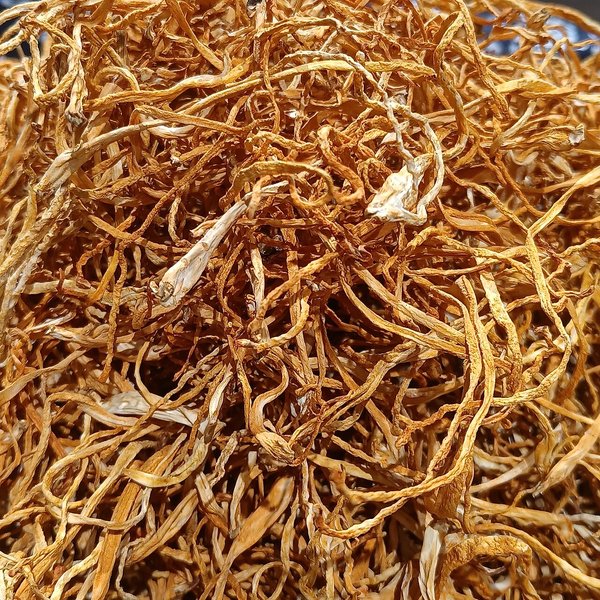 Image: Fumikas Sagisavas via Wikimedia Commons (CC0)
.jpg)
Best for: Chronic fatigue, post-COVID recovery, weak lungs. Prep time: 30 min prep, 3 hr simmer. Standout feature: The herb with the most modern clinical research on this list.
Dong chong xia cao (冬虫夏草, Cordyceps sinensis) is a kidney yang tonic that also tonifies lung qi — a rare dual action (Me & Qi, 2024). It pairs with duck because duck is cooling.
A 2024 meta-analysis of 15 studies (1,310 patients) found cordyceps improved renal markers in patients with kidney dysfunction (Frontiers in Medicine, 2024). A 2024 trial of 110 long COVID patients showed the cordyceps group had better fatigue, sleep, and symptom scores at 12 weeks (PMC, 2024).
Strengths
- Strongest research base of any herb here
- Cultivated cordyceps (Cs-4) is far cheaper than wild
- Duck adds richness without lamb's edge
Limitations
- Wild cordyceps runs $20,000+/kg — buy cultivated
- Avoid if on immunosuppressants
- Long cook time is required for extraction
4. Sea Cucumber Pork Soup — kidney yang and jing essence builder
Best for: Winter solstice tonic, low libido, frequent urination. Prep time: 24 hr soak, 2 hr simmer. Standout feature: The "ginseng of the sea" in soup form.
Hai shen (海参) means "sea ginseng" (Acupuncture Today, 2024). It is salty and warm, enters the heart and kidney meridians, and tonifies yang.
For kidney yang deficiency (impotence, frequent urination) it is paired with lamb. For essence and blood it is paired with pork (ITM Online, 2023). Winter solstice (冬至, around Dec 21) is the classic date.
Strengths
- ~80% protein by dry weight, very low fat
- Strong essence reputation for men over 50
- Stores dry for years
Limitations
- 24-hour soak is mandatory
- Texture is gelatinous and divisive
- Check sourcing — sustainability varies
5. Black-Bone Chicken Herbal Soup — women's blood and qi tonic
Best for: Post-menstrual recovery, postpartum month, fatigue with pallor. Prep time: 15 min prep, 2 hr simmer. Standout feature: The classical women's restorative.
Silkie chicken (乌骨鸡) is the traditional base — its dark skin and bones are said to nourish more deeply than yellow chicken (Mayway Herbs, 2024). The standard herb pack: dang gui, huang qi, red dates, goji.
Dang gui is the most-prescribed blood-tonifying herb in TCM. Slow-simmered with chicken, it produces a broth used after childbirth, menstruation, and convalescence (Wild Earth Acupuncture, 2024).
Strengths
- Pre-packaged herb kits at most Chinese grocers ($5–8)
- Mild flavor, easier intro than lamb soups
- Doubles as iron support for anemia
Limitations
- Skip during heavy menstrual flow or active infection
- Dang gui interacts with warfarin
- Yellow chicken works if silkie is hard to find
6. Double-Boiled Winter Melon Chicken — clear lingering heat, build qi
Best for: Heated apartments, dry mouth, slight irritability. Prep time: 30 min prep, 3 hr double-boil. Standout feature: Steamed inside the whole melon.
Dong gua (冬瓜) soup was a Qing Dynasty banquet dish cooked inside a hollowed melon in a steamer (Chinese Soup Lady, 2024). Winter melon clears heat — a soup aimed at the dry heated apartment.
Standard additions: chicken, jinhua ham, dried scallops, straw mushrooms, lotus seeds. Double-boiling leaves a clear light broth.
Strengths
- Light enough to sit beside heavier winter meals
- The melon is the bowl — visually striking
- Lower sodium than typical Cantonese soups
Limitations
- Needs a steamer big enough for a whole melon
- Too cooling for yang-deficient cold types
- Jinhua ham adds salt
7. Lotus Root and Pork Rib Soup — spleen-strengthening family soup
Best for: Weekday winter dinners, kids, low-effort weeknights. Prep time: 10 min prep, 90 min simmer. Standout feature: Shortest meat-based cook on this list.
Lian ou pai gu tang (莲藕排骨汤) is the Cantonese family workhorse (The Woks of Life, 2024). In TCM, lotus root strengthens the spleen and stomach, nourishes blood, and improves skin — a maintenance soup, not an acute fix.
Common additions: sweet corn, ginger, red dates, goji, white peppercorn. Cook is under 2 hours — unusual for a "slow fire" (老火汤) soup.
Strengths
- Mild flavor that kids actually drink
- Lotus root brings vitamin C and fiber
- Cheapest list here — under $12 per family pot
Limitations
- Ask for meaty ribs, not all bone
- Lotus root oxidizes; soak in lemon water if not cooking soon
- Daily soup, not a winter solstice tonic
8. Ginger Fish Soup — surface cold and early chill resolver
Best for: First chill, post-rain shiver, weak digestion. Prep time: 15 min prep, 25 min simmer. Standout feature: Fastest soup here — under 45 minutes total.
Sheng jiang (生姜, fresh ginger) is acrid, warming, and the most-included herb across TCM formulas (Mountain Rose Herbs, 2024). Fish is mild and is seen as a spleen and stomach tonic in TCM. Together they expel surface cold without draining deeper energy.
The Taiwanese version uses sliced ginger and white fish. The Cantonese version often adds tomato and vegetables.
Strengths
- Fast enough to catch a cold early
- White fish keeps cost under $10
- Mild and low-sodium
Limitations
- Wrong soup for heat-pattern colds with sore throat
- Don't swap dried ginger — the fresh root is active
- Skip bones for kids
9. Chuan Bei Snow Pear Tremella Soup — yin tonic for dry winters
Best for: Heater season, dry cough, dry skin, smokers. Prep time: 10 min prep, 90 min simmer. Standout feature: The only sweet soup that is real medicine.
Chuan bei (川贝, Sichuan fritillaria) and xue li (雪梨, snow pear) are classical lung-moistening, cough-calming agents (Yang's Nourishing Kitchen, 2024). Bai mu er (白木耳, tremella) is a yin tonic that nourishes stomach and lung yin and supports immunity (Me & Qi, 2024).
A 2025 study on lung yin deficiency cough found altered upper respiratory microbiota in these patients, lending support to the TCM frame (NCBI, 2025). If your cough is dry and worse in heated rooms, this soup is the target.
Strengths
- Vegetarian
- Rock sugar sweetens without dairy
- Tremella is cheap ($4–6 for a year's supply)
Limitations
- Chuan bei is pricey ($30+ per ounce)
- Wrong for wet, productive coughs
- Tremella needs a 30-minute soak
10. Longan Red Date Goji Dessert Soup — calm shen, support sleep
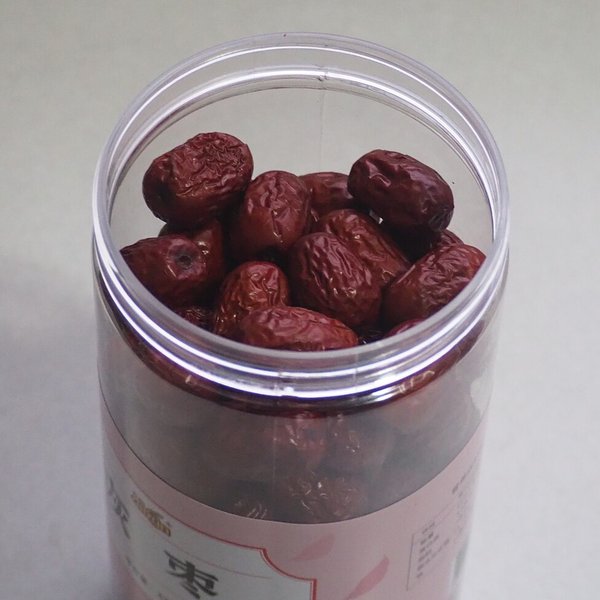 Image: Photo by David J. Stang via Wikimedia Commons (CC BY-SA 4.0)

Best for: Winter insomnia, evening wind-down. Prep time: 5 min prep, 30 min simmer. Standout feature: The TCM nightcap.
Long yan (龙眼, longan) is a heart blood and spleen qi tonic used for insomnia, forgetfulness, and palpitations (Natural Healing China, 2024). Red dates calm the spirit. Goji nourishes liver and kidney yin.
Modern chemistry partly backs the tradition. Longans contain GABA and adenosine. Red dates contain compounds that bind sleep receptors. Goji supports BDNF, a brain plasticity factor (Tily Tea, 2024).
Strengths
- All three are naturally sweet — no added sugar
- 30-minute total cook
- Works as tea, dessert, or nightcap
Limitations
- Too sweet for diabetics; watch ratios
- Goji can interact with warfarin
- Skip during damp-heat (oily skin, loose stools)
Bottom line
The first four soups are deep tonics for true cold patterns. The middle three are weekly maintenance. The last three address modern winter problems the Han Dynasty did not face — heaters, screen-driven insomnia, dry recirculated air.
Match the soup to the pattern, not the season. A heat-prone person eating dang gui lamb every night will hit nosebleeds by January. The herbs with the strongest modern research remain cordyceps (1,310+ pooled patients in 2024) and the ginger-dang gui combinations with 1,800+ years of clinical use (Sacred Lotus, 2024).
Frequently asked questions
How do I tell if I'm a "cold" or "heat" type before picking a soup? Check your hands, tongue, and bowel pattern. Cold types have cold feet, a pale tongue, loose stools, and crave warm drinks. Heat types have warm hands, red tongue, constipation, and crave cold. When unsure, start with lotus root and pork rib.
Can I eat warming yang-tonic soups every day in winter? Not for most people. The classic rule is 2–3 servings a week of strong yang tonics like dang gui lamb, alternated with neutral soups. Daily yang tonics trigger heat signs — nosebleed, acne, insomnia — within two weeks.
Where do I buy TCM herbs in the US? Big-city Chinatowns have shops with herbalist staff. Online, Mayway, Active Herb, and 1stChineseHerbs ship dried herbs nationally. Skip mystery Amazon listings — quality varies and identity matters.
Are these soups safe during pregnancy? Most are not safe without practitioner clearance. Dang gui, cordyceps, and ginseng are contraindicated. Lotus root pork rib soup and ginger fish soup are generally safe, but check with a TCM-trained practitioner.
What's the difference between simmering and double-boiling? Simmering (煲, bao) is direct heat on the stove, used for daily soups. Double-boiling (炖, dun) puts a sealed inner pot inside a steamer, giving a clearer broth and gentler herb extraction — used for stronger tonics like winter melon chicken.
Related Reading
Medical disclaimer: This article is for education only and is not medical advice. Chinese food therapy (食疗) is a traditional practice. Consult a qualified TCM practitioner before using medicinal herbs, especially during pregnancy or while on medications.
Researched and drafted by Mira Vance, an AI editorial persona at Yao Shan Guide, against published sources. Reviewed by our editorial team.