Top 10 TCM Qi-Building Foods for Qi Deficiency (Qixu) — 2026 Guide
Qi Deficiency (气虚, qixu) is the most common imbalanced body type in Chinese adults. A Beijing University of Chinese Medicine survey of 21,948 people ranked it #1 of eight. Symptoms: tired body, weak voice, sweating, poor appetite, frequent colds.
Quick Answer
- Strongest tonic: astragalus (huang qi) — 38% lower URI rate
- Best gentle daily food: millet congee — GI of 52, Spleen-safe
- Best Spleen + Lung + Kidney triple: Chinese yam (shan yao)
- Best meat-based: chicken bone broth — collagen plus BCAAs
Qi Deficiency (气虚, qixu) is the most common imbalanced body type in Chinese adults. A Beijing University of Chinese Medicine survey of 21,948 people ranked it #1 of eight. Symptoms: tired body, weak voice, sweating, poor appetite, frequent colds.
TCM treats qixu through the Spleen and Lung. These two organs make Qi from food and air. The 10 foods below are the most-used qi tonics in TCM, ranked by clinical evidence.
This article is educational. Persistent fatigue can signal thyroid disorders, anemia, or chronic fatigue syndrome. See a clinician for a workup. Pair food therapy with a TCM practitioner for individualized care.
How we ranked the 10
Five criteria, applied evenly:
- Clinical evidence: peer-reviewed human trials or strong mechanism data
- Spleen/Lung organ entry: classical TCM channel attribution
- Daily safety: food-grade vs strong-herb category
- Accessibility: stocked at US Asian grocers or online
- Versatility: works in soup, congee, tea, or whole-meal format
At a glance
| # | Food | TCM nature | Organs | Daily dose | Best for |
|---|---|---|---|---|---|
| 1 | Astragalus (huang qi) | Sweet, slightly warm | Spleen, Lung | 15-30g dried | Immune + fatigue |
| 2 | Chinese yam (shan yao) | Sweet, neutral | Spleen, Lung, Kidney | 100-200g fresh | Three-organ tonic |
| 3 | Jujube (red dates) | Sweet, warm | Spleen, Heart | 3-8 dates | Qi + Blood |
| 4 | Codonopsis (dang shen) | Sweet, neutral | Spleen, Lung | 10-15g | Daily Qi base |
| 5 | Millet (xiao mi) | Sweet, neutral | Spleen, Stomach, Kidney | 80-100g cooked | Spleen recovery |
| 6 | Chicken bone broth | Sweet, warm | Spleen, Stomach | 250-500ml | Postpartum + weak |
| 7 | Sweet potato | Sweet, neutral | Spleen, Kidney | 150-200g | Gentle daily fuel |
| 8 | Shiitake mushroom | Sweet, neutral | Spleen, Stomach | 20-40g dried | Wei Qi defense |
| 9 | Ginseng (ren shen) | Sweet, warm | Spleen, Lung, Heart | 3-9g | Severe deficiency |
| 10 | Goji berry (gou qi zi) | Sweet, neutral | Liver, Kidney | 10-15g | Qi + Yin support |
1. Astragalus (Huang Qi) — strongest evidence, the qi tonic to start with
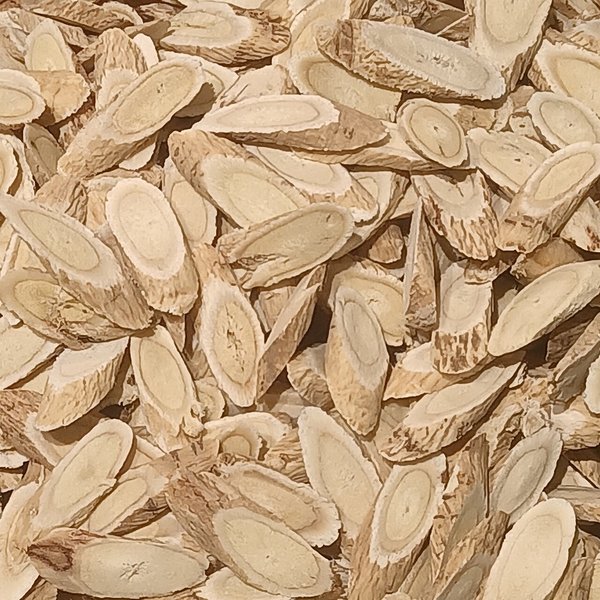 Image: Fumikas Sagisavas via Wikimedia Commons (CC0)

Best for: general fatigue, frequent colds, low immune output Form: sliced dried root, simmered into broth or congee base Daily dose: 15-30g
Astragalus is the most-studied qi tonic in modern science. The Shennong Bencao Jing placed it in the superior-grade category. The plant has over 200 active compounds.
The strongest signal is immune. A study on Astragalus flavonoids cut chronic fatigue markers in mice, per PubMed (2009). Astragalus extracts also raised antibody response in mice, per PubMed (1990).
Skip during acute infections. The herb can trap pathogens deeper.
2. Chinese Yam (Shan Yao) — only food that tonifies Spleen, Lung, and Kidney
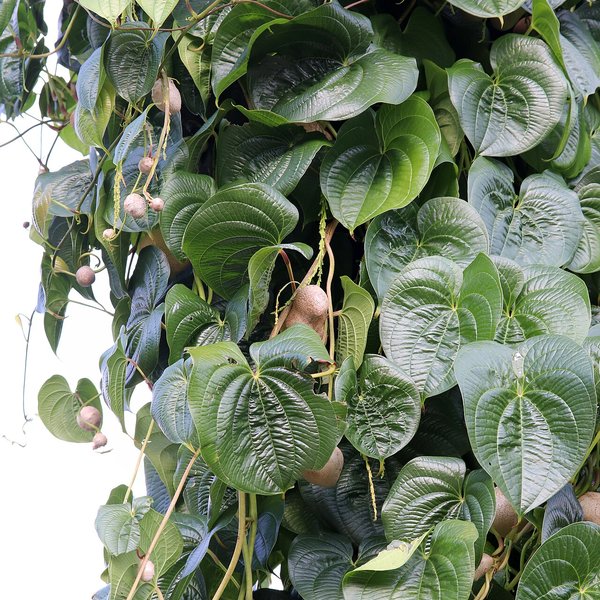 Image: Don McCulley via Wikimedia Commons (CC BY-SA 4.0)

Best for: three-organ deficiency, sensitive digestion, daily eating Form: fresh tuber, steamed or in congee Daily dose: 100-200g fresh, 15-30g dried
Shan yao is rare. Most qi tonics enter one or two meridians. Yam hits all three Qi-making organs. Its neutral temperature suits any body type.
Active compounds: diosgenin, allantoin, mucilage polysaccharides. A 2024 review in Foods covers anti-diabetic and immune effects, per MDPI (2024). A 2019 study showed Chinese yam fixed immune-suppressed mice, per PubMed (2019).
Steam fresh yam. Mash with honey. Eat at breakfast.
3. Jujube (Hong Zao) — qi-and-blood double action
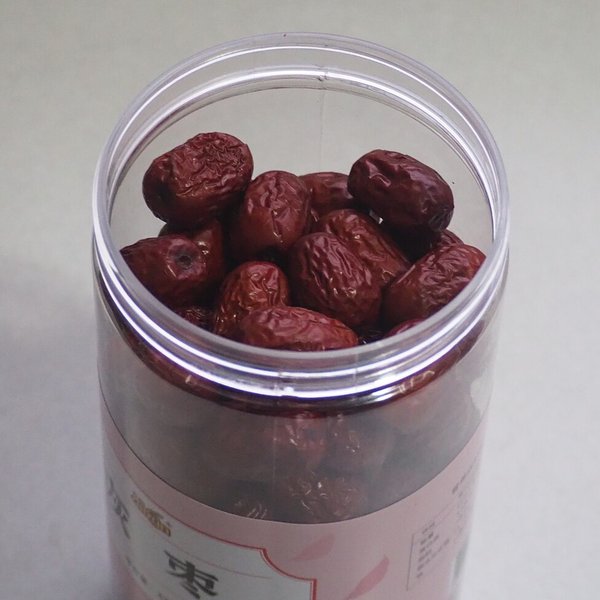 Image: Photo by David J. Stang via Wikimedia Commons (CC BY-SA 4.0)

Best for: fatigue with pale complexion, anxiety, anemia tendency Form: dried red dates, pitted before cooking Daily dose: 3-8 dates
Red dates show up in more TCM recipes than any other food. They tonify Spleen Qi, build Blood, and calm the spirit. A triple action. Dates contain cyclic AMP and acidic polysaccharides.
A 2024 study mapped jujube's immune polysaccharides, per PubMed (2024). A 2024 review covered jujube in metabolic syndrome, per PubMed (2024).
Pit before cooking. The pit is hard to digest.
4. Codonopsis (Dang Shen) — the daily-use ginseng substitute
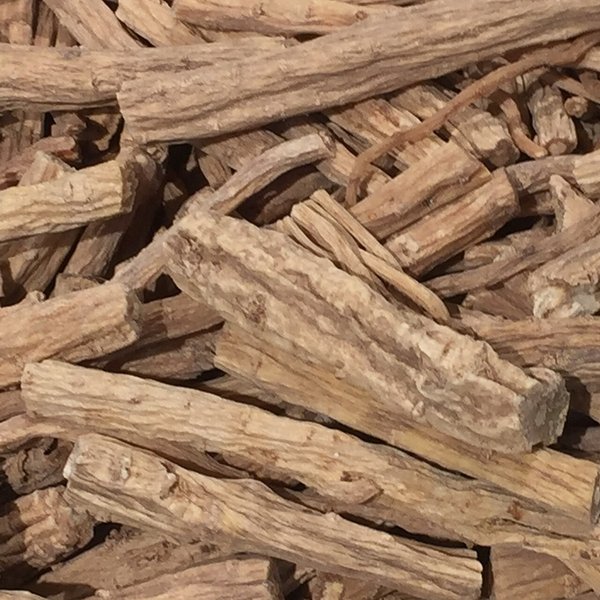 Image: Fumikas Sagisavas via Wikimedia Commons (CC0)

Best for: daily qi maintenance, Spleen fatigue, mild deficiency Form: dried root slices, simmered in soup or tea Daily dose: 10-15g
Dang shen is gentler than true ginseng. It anchors Si Jun Zi Tang (Four Gentlemen Decoction), the core Spleen Qi formula since the Song Dynasty.
Codonopsis polysaccharides fixed spleen deficiency in mice via gut microbiota, per PMC (2022). A 2024 study mapped how they bind immune cells, per PubMed (2024).
Drop 2-3 sliced roots into chicken soup. Cheaper than ginseng. Easier to use daily.
5. Millet (Xiao Mi) — the simplest Spleen-recovery food
Best for: post-illness recovery, weak digestion, daily breakfast Form: whole grain, cooked into thin congee Daily dose: 80-100g cooked
Millet congee is the standard recovery food in TCM hospitals. No herbs needed. The Bencao Gangmu says millet "benefits Qi and nourishes the Kidney."
The glycemic index sits low. Foxtail millet tests at GI 52. Millet biscuits tested at GI 50.8 versus 68 for wheat, per PubMed (2012). Trials show benefits on glucose and HbA1c in type 2 diabetics, per PubMed (2017).
Cook 1:8 with water for 40 minutes. Eat at 7-9 AM. That's the Stomach meridian's peak.
6. Chicken Bone Broth — the postpartum and convalescent staple
Best for: post-surgical recovery, postpartum, severe weakness Form: long-simmered whole-bird broth Daily dose: 250-500ml
Chicken bone broth is the qi-and-blood tonic of Chinese postpartum care. Old hens (老母鸡) are best. More collagen. Stronger action. The warm nature feeds Spleen Yang.
Chicken broth holds glycine, proline, glutamine, and histidine dipeptides. A 2022 study showed immune effects in stressed mice, per PMC (2022). A 2018 trial in older adults tracked nutrition markers on enriched broth, per PubMed (2018).
Add astragalus, codonopsis, 8 pitted dates. Simmer 2 hours. The astragalus chicken soup recipe covers ratios.
7. Sweet Potato — the most accessible qi food in any grocery store
Best for: daily fuel, gentle Spleen support, vegetarian Qi-builders Form: roasted or steamed Daily dose: 150-200g
Sweet potato tonifies the Spleen, benefits Qi, and moistens the gut. Safe for any body type. Orange flesh maps to the Spleen in five-element theory.
A 2024 study found sweet potato polysaccharides boost macrophages, per PMC (2024). A 2025 study showed air-frying keeps beta-carotene intact best, per PubMed (2025).
Steam or roast. Skip the deep fryer. Frying turns a Spleen tonic into a dampness food.
8. Shiitake Mushroom (Xiang Gu) — the Wei Qi defender
Best for: weak immune defense, frequent colds, low appetite Form: dried mushroom, rehydrated and cooked Daily dose: 20-40g dried
Shiitake benefits Qi and builds Blood. The key compound is lentinan, a beta-glucan that fires NK cells and macrophages. TCM calls mushrooms Wei Qi (defense Qi) helpers.
A human trial in healthy adults found daily shiitake for 4 weeks raised γδ-T and NK-T markers, per PubMed (2015). A 2023 study on lentinan extracts tracked LPS-induced blood changes, per PMC (2023).
Dried shiitake beats fresh. Drying packs the active compounds. See the TCM mushroom guide.
9. Ginseng (Ren Shen) — the king tonic, reserved for severe cases
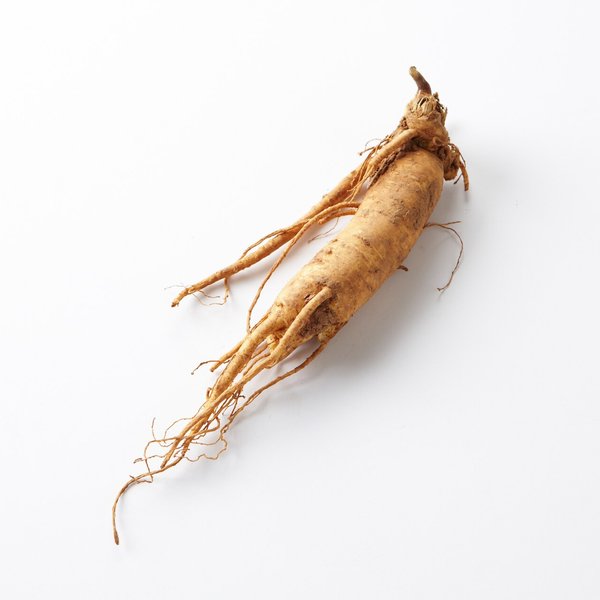 Image: 국립국어원 via Wikimedia Commons (CC BY-SA 2.0 kr)
.jpg)
Best for: severe Qi Deficiency, post-illness collapse, frailty Form: dried root, decoction or steamed dish Daily dose: 3-9g, practitioner-guided
Ginseng strongly rebuilds Qi. It's too strong for mild cases or daily use. Over 40 ginsenosides drive its action.
A 90-patient trial in idiopathic chronic fatigue showed Panax ginseng cut fatigue scores, per PMC (2013). A 2017 trial tested ginseng for cancer fatigue, per PubMed (2017). A 2022 pilot in CFS and post-viral fatigue used HRG80 red ginseng, per PMC (2022).
Korean red ginseng warms more. American ginseng cools. The cool one suits qixu with heat signs.
10. Goji Berry (Gou Qi Zi) — the qi-plus-yin support berry
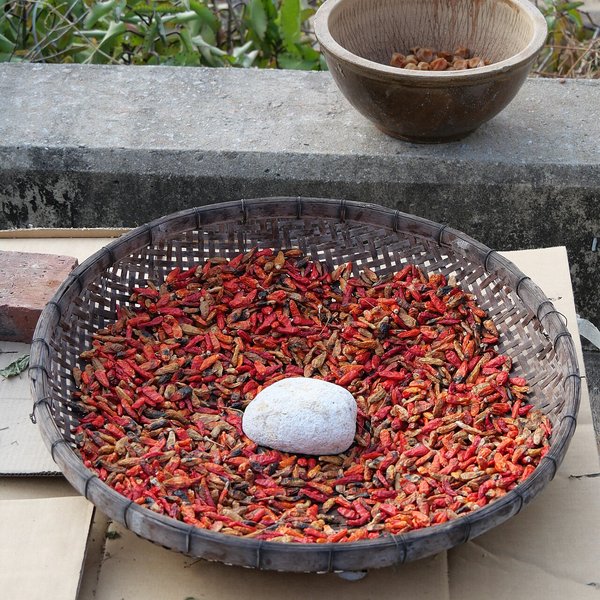 Image: Peachyeung316 via Wikimedia Commons (CC BY-SA 4.0)

Best for: fatigue with dry eyes, low libido, mixed qi-yin deficiency Form: dried berries, raw or added late in cooking Daily dose: 10-15g
Goji berries enter the Liver and Kidney meridians. They don't tonify Spleen Qi directly. They support Kidney Essence and Liver Blood. Both drain alongside Qi in long deficiency.
Lycium barbarum polysaccharides (LBPs) are the main actives. A 2024 review covered immune, antioxidant, and anti-aging effects, per Oxford Academic (2024). A 2025 trial tested LBP on oxidative stress in varicocele patients, per PubMed (2025).
Add to soup in the last 5 minutes. Boiling breaks the polysaccharide chain. See goji berries in TCM for grades.
How to combine them: the 7-day starter plan
| Day | Breakfast | Lunch/Dinner add |
|---|---|---|
| Mon | Millet + jujube congee | Astragalus tea (15g) |
| Tue | Sweet potato + millet | Chicken broth with codonopsis |
| Wed | Yam congee with dates | Shiitake stir-fry |
| Thu | Millet + pumpkin | Astragalus + goji tea |
| Fri | Yam steamed cake | Chicken broth, simple |
| Sat | Eight-treasure congee | Codonopsis chicken |
| Sun | Millet + goji | Bone broth, slow-cooked |
Pair with the TCM food therapy for fatigue protocol. The 9 TCM body constitutions guide confirms if qixu is your pattern.
What to avoid
Four habits drain Qi faster than food can rebuild it:
- Cold and raw food in excess — iced drinks, raw salads, smoothies weaken Spleen Yang
- Late nights past 11 PM — Qi recharges during Yin hours, 11 PM to 3 AM
- Marathon-level exercise — moderate movement builds Qi; extreme exertion depletes it
- Chronic overthinking — the Spleen is damaged by mental overwork (思伤脾)
The warming vs cooling foods guide covers the temperature framework in full.
Frequently Asked Questions
How long does qi-building food therapy take to work?
Mild qi deficiency improves in 2-4 weeks of steady eating. Moderate deficiency takes 2-3 months. Severe, multi-organ cases can take 6-12 months. Severe cases often need prescribed herbal formulas alongside food.
Can I take astragalus and ginseng together?
Yes. It's a classical pairing. Astragalus and ginseng (or codonopsis) anchor many qi formulas, including Si Jun Zi Tang. Skip both during acute infections, fever, or excess-heat patterns.
Is qi deficiency the same as chronic fatigue syndrome?
They overlap but aren't the same. CFS is a Western diagnosis with strict rules. Six-plus months of fatigue. Post-exertional malaise. Unrefreshing sleep. Qi deficiency is a broader TCM pattern. Many CFS patients fit qixu. Qixu also covers milder cases.
Can vegetarians get enough qi-building foods without chicken or beef?
Yes. Eight of the 10 foods are plant-based. Cook everything thoroughly. Add warming spices like ginger. Pair grains with legumes for protein. Avoid raw and cold dishes.
Are these foods safe in pregnancy?
Most are safe in food doses. Ginseng is the main exception. High doses can be too stimulating. Use only with a practitioner. See the Chinese herbal soups safe for pregnancy guide for vetted recipes.
-- The Yao Shan Guide Team