The 9 TCM Body Constitutions: What Chinese Medicine Says About Your Diet
This article is for educational purposes only and does not constitute medical advice. Consult a qualified TCM practitioner before making dietary changes based on traditional Chinese medicine principles.

Quick Answer
- Traditional Chinese Medicine classifies every person into one of 9 body constitutions (九种体质), each requiring a different dietary approach for optimal health
- The system was standardized in 2009 by the China Association of Chinese Medicine — national surveys show only about 32.75% of Chinese adults have a balanced constitution, meaning two-thirds live with at least one imbalance
- Your constitution determines which foods heal you and which harm you — a warming lamb stew that rescues someone with Yang Deficiency could trigger acne and irritability in someone with Damp-Heat
- Taking the [Constitution Quiz](/tools/constitution-quiz) is the fastest way to identify your type and get personalized food therapy recommendations
Photo by OlgaVolkovitskaia on Pixabay
This article is for educational purposes only and does not constitute medical advice. Consult a qualified TCM practitioner before making dietary changes based on traditional Chinese medicine principles.
Why Your TCM Body Constitution Matters More Than Any Single Superfood
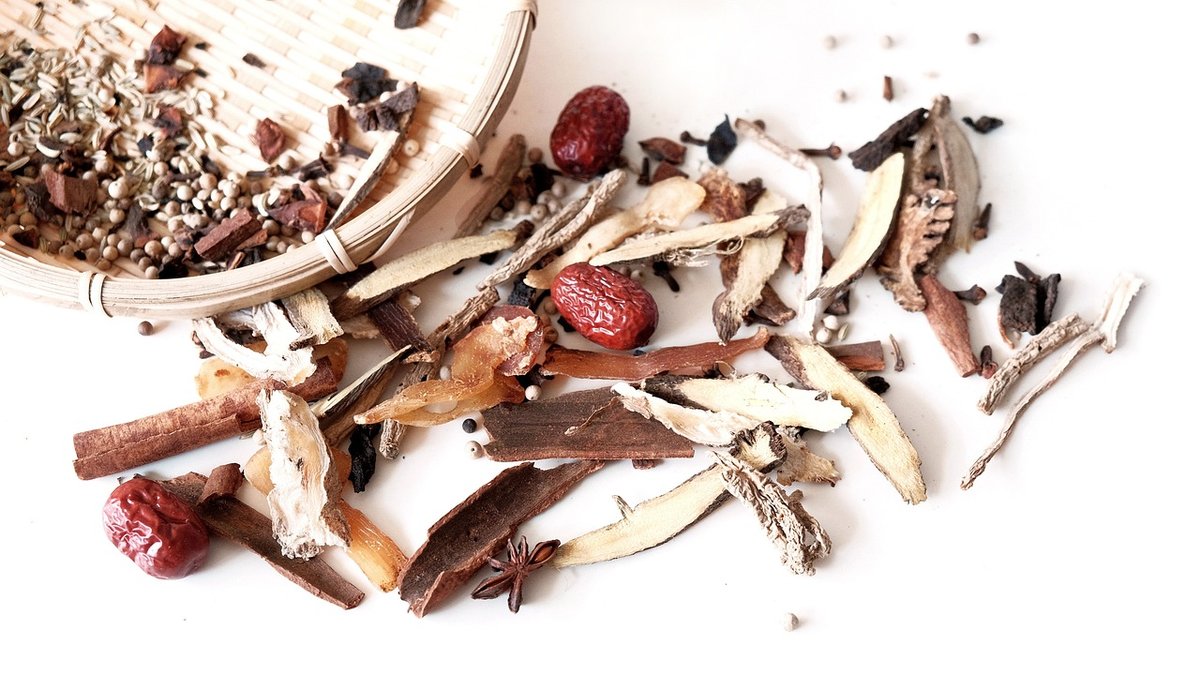
Walk into any Chinese medicine clinic and the first thing a practitioner does isn't prescribe herbs. They assess your constitution (体质辨识).
This concept dates back to the Huangdi Neijing (Yellow Emperor's Classic of Internal Medicine), written over 2,000 years ago. But it wasn't formalized into a modern classification system until 2009, when Professor Wang Qi (王琦) of the Beijing University of Chinese Medicine published the Standard of Classification and Determination of Constitution in Chinese Medicine (《中医体质分类与判定》). The China Association of Chinese Medicine (中华中医药学会) adopted it as a national standard.
The framework identifies 9 constitutions: one balanced type and eight imbalanced ones. According to large-scale epidemiological studies conducted across China involving over 21,948 participants in nine provinces, approximately 32.75% of the population has a balanced Ping He constitution. That means roughly two-thirds of people live with at least one constitutional imbalance — and most don't realize it.
Here's what makes this framework powerful for food therapy: it explains why the same food can help one person and hurt another. Green tea is fantastic for Damp-Heat types who need to clear internal heat. But for someone with Yang Deficiency who's already cold all the time, that same green tea makes things worse.
Professional TCM diagnosis uses four methods: observation (望), listening and smelling (闻), inquiry (问), and pulse-taking (切). A skilled practitioner examines your facial complexion, voice strength, body shape, tongue color and coating, and pulse quality to determine constitution type — often within minutes.
Let's break down each constitution, how to recognize it, and exactly what to eat (and avoid).
The 9 TCM Body Constitutions: A Complete Breakdown
1. Ping He Zhi (平和质) — Balanced Constitution
What it looks like: Good energy, sound sleep, easy digestion, rare illness, stable weight. Rosy complexion. Healthy pale red tongue with a thin white coating. Steady, moderate pulse.
How common: About 32.75% of the population — the gold standard that all dietary therapy aims to restore.
What to eat:
- A diverse, balanced diet following the five-flavor principle (五味调和): sweet, sour, bitter, pungent, and salty in moderation
- Whole grains: brown rice, millet, barley
- Seasonal fruits and vegetables in variety
- Moderate amounts of all proteins — no extremes
What to avoid:
- Extreme diets of any kind
- Overeating — the classic TCM rule is 七八分饱 (eat until 70-80% full)
- Excessive cold, raw, or extremely spicy food
Food therapy goal: Maintain balance. Don't fix what isn't broken.
2. Qi Xu Zhi (气虚质) — Qi Deficiency Constitution
What it looks like: Persistent fatigue that rest doesn't fix. Shortness of breath during mild exertion. Frequent colds and slow recovery. Easy spontaneous sweating (自汗). Soft, quiet voice. Pale tongue with teeth marks along the edges. Weak pulse.
How common: One of the most prevalent imbalanced types, affecting approximately 12.71% of the population.
What to eat:
- Yellow and sweet foods that tonify the Spleen and Stomach: sweet potato, pumpkin, Chinese yam (山药), millet, glutinous rice
- Qi-boosting proteins: chicken (especially hen soup/母鸡汤), beef, carp, eel
- Medicinal foods: astragalus (黄芪), Chinese red dates (大枣), longan fruit (桂圆), honey, ginseng (人参) in small amounts
- Mushrooms: shiitake (香菇), maitake, lion's mane — strengthen Qi through the Spleen
- Legumes: soybeans, white lentils (白扁豆), chickpeas
What to avoid:
- Raw and cold foods — cold salads, iced drinks, excessive raw fruit
- Qi-consuming foods: betel nut (槟榔), raw radish in large quantities
- Greasy, hard-to-digest foods that tax weak digestion
- Skipping meals, which depletes Qi further
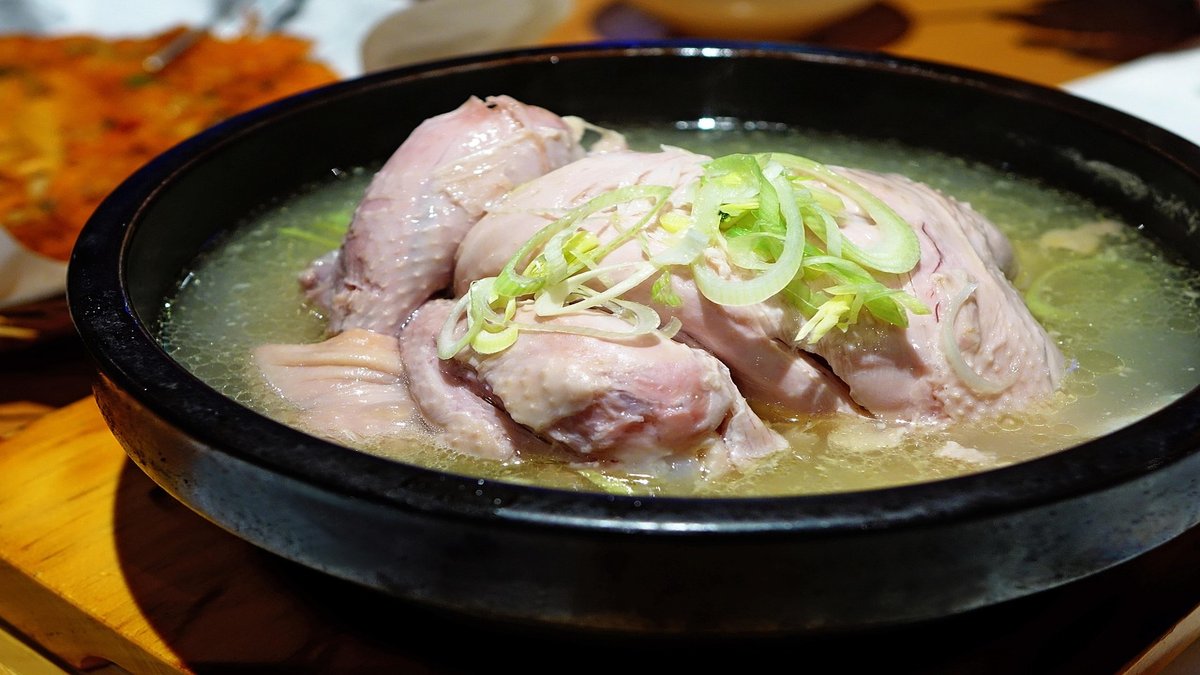
Sample recipe — Astragalus and Red Date Chicken Soup (黄芪红枣炖鸡): Simmer 30g astragalus, 10 red dates (pitted), and 10g goji berries with half a free-range chicken in 2.5L water for 2 hours over low heat. Add 3 slices of ginger. Season with a pinch of salt before serving. Drink the broth and eat the chicken for 1-2 weeks during seasonal transitions. This is considered the foundational Qi-tonifying soup in food therapy.
Check any ingredient's thermal nature using the Ingredient Lookup tool.
3. Yang Xu Zhi (阳虚质) — Yang Deficiency Constitution
What it looks like: Cold hands and feet year-round, even in summer. Strong preference for warm drinks and environments. Pale, sometimes puffy complexion. Loose stools, especially in the morning. Frequent urination at night. Low libido. Puffy, pale tongue with wet coating. Slow, deep pulse.
How common: Approximately 7.9% of the population, with higher prevalence in northern China and among older adults.
What to eat:
- Warming meats: lamb (the single most recommended protein for Yang Deficiency), venison, shrimp, beef
- Warming vegetables and spices: leeks (韭菜), fresh ginger, scallions, cinnamon bark (肉桂), fennel seed, Sichuan peppercorn, cloves (丁香)
- Warming grains and nuts: glutinous rice, oats, walnuts (核桃), chestnuts, pine nuts
- Medicinal foods: dried longan, Chinese chives, fenugreek
What to avoid:
- Cold and raw foods — this is the single most important dietary rule for Yang Deficiency
- Cooling fruits: pear, watermelon, persimmon, water chestnut (荸荠), banana
- Green tea and chrysanthemum tea (both have cooling properties)
- Excessive dairy, considered cold and damp in TCM
- Bitter gourd, lotus root (raw), and other cooling vegetables
Sample recipe — Ginger Lamb Stew (当归生姜羊肉汤): Brown 500g lamb shoulder in a hot pot. Add 5 thick ginger slices, 10g Angelica sinensis (当归), and 2L boiling water. Simmer 2.5 hours. This is one of the oldest recorded medicinal food recipes, appearing in Zhang Zhongjing's Jinkui Yaolue (《金匮要略》) from the Han Dynasty, roughly 200 CE. Still prescribed today — nearly 2,000 years later.
4. Yin Xu Zhi (阴虚质) — Yin Deficiency Constitution
What it looks like: Heat in the palms, soles, and chest (五心烦热). Dry skin, mouth, and throat. Night sweats (盗汗). Insomnia or restless sleep. Thin body type. Red tongue with little or no coating — sometimes cracked. Thin, rapid pulse.
How common: Roughly 8.89% of the population. More common in people who work long hours, chronically sleep-deprived, or live in dry climates.
What to eat:
- Moistening, cooling proteins: duck, lean pork, tofu, eggs, soft-shell turtle (甲鱼)
- Yin-nourishing fruits: pear, mulberry, sugar cane juice, banana, persimmon
- Vegetables: lotus root, spinach, black fungus (黑木耳), lily bulb (百合), asparagus
- Medicinal foods: goji berries (枸杞), American ginseng (西洋参), dendrobium (石斛), tremella mushroom (银耳), black sesame seeds
- Grains: black rice, millet
What to avoid:
- Hot, spicy, drying foods: lamb, chili pepper, garlic (in excess), fried foods
- Warm-natured herbs in large amounts: dried ginger, cinnamon, fennel
- Alcohol and coffee — both generate internal heat and deplete fluids
- Late-night eating, which further depletes Yin
Sample recipe — Pear and Tremella Sweet Soup (雪梨银耳羹): Soak 1 large piece of tremella mushroom for 30 minutes, tear into small florets. Peel and cube 2 Asian pears. Simmer with 10g goji berries, 20g lotus seeds, and 15g rock sugar in 1.5L water for 1.5 hours until the tremella becomes silky and gelatinous. This is the most beloved Yin-nourishing dessert in Chinese food culture — found in homes, restaurants, and hospital cafeterias across the country.
5. Tan Shi Zhi (痰湿质) — Phlegm-Damp Constitution
What it looks like: Overweight, especially abdominal obesity. Oily face and scalp. Feeling of heaviness and sluggishness. Sticky or sweet taste in the mouth. Excessive phlegm. Chest tightness. Thick, greasy tongue coating. Slippery pulse.
How common: One of the fastest-growing types in modern China, now affecting approximately 12.37% of the population. A 2015 study published in the Journal of Traditional Chinese Medicine found Phlegm-Damp types have a 2.58 times higher risk of developing type 2 diabetes compared to balanced types. Researchers link this rise to processed food consumption, sugary drinks, and sedentary lifestyles.
What to eat:
- Dampness-draining foods: Job's tears barley (薏苡仁), adzuki beans (赤小豆), corn, winter melon (冬瓜)
- Aromatic, dampness-resolving additions: aged tangerine peel (陈皮), cardamom, Sichuan pepper, white pepper
- Light proteins: fish (especially freshwater fish), lean chicken, shrimp
- Vegetables: kelp (海带), seaweed, celery, bamboo shoots, white radish (白萝卜)
- Teas: Pu-erh tea (普洱茶), barley tea, lotus leaf tea (荷叶茶)
What to avoid:
- Sweet, sticky, greasy foods — pastries, candy, deep-fried anything, glutinous rice products
- Fatty meats: pork belly, duck, fatty cuts
- Dairy products (considered strongly damp-producing in TCM)
- Cold drinks and ice cream (impair the Spleen's ability to transform dampness)
- Excessive salt (promotes water retention and compounds dampness)
- Beer (the most damp-producing alcoholic beverage)
Sample recipe — Barley and Adzuki Bean Soup (薏米赤小豆汤): Soak 50g Job's tears and 50g adzuki beans overnight. Boil in 1.5L water for 1.5 hours until soft. Add a strip of aged tangerine peel (陈皮) for the last 30 minutes. Drink the liquid and eat the beans. This is the single most recommended daily recipe for Phlegm-Damp types across Chinese food therapy literature — simple, effective, and inexpensive.
6. Shi Re Zhi (湿热质) — Damp-Heat Constitution
What it looks like: Oily, acne-prone skin (especially on the face, back, and chest). Bitter taste in the mouth, especially in the morning. Dark, scanty urine. Irritability and short temper. Body odor. Tendency toward urinary tract infections and skin infections. Yellow, greasy tongue coating. Slippery, rapid pulse.
How common: Approximately 9.88% of the population, with significantly higher prevalence in southern China — Guangdong, Guangxi, Hunan, and Fujian provinces — where the climate is hot and humid.
What to eat:
- Cooling, dampness-clearing foods: mung beans (绿豆), adzuki beans, celery, cucumber, lotus root
- Bitter foods (bitter flavor clears heat): bitter gourd (苦瓜), lotus seed core (莲子心), dandelion greens
- Cooling fruits: watermelon, pear, kiwi
- Grains: barley, buckwheat, millet
- Teas: chrysanthemum tea (菊花茶), lotus leaf tea, peppermint tea
What to avoid:
- All warming meats: lamb, beef, shrimp, venison
- Pungent spices: ginger, garlic, chili, Sichuan pepper
- Alcohol — especially beer, baijiu, and red wine
- Fried and barbecued foods of any kind
- Hot pot (combines excessive heat, dampness, and spice in one meal — the worst trigger for this type)
- Mango, durian, lychee (all hot-natured fruits)
Sample recipe — Mung Bean and Lily Bulb Soup (绿豆百合汤): Boil 100g mung beans in 1.5L water for 40 minutes until they split open. Add 30g dried lily bulb and simmer another 20 minutes. Sweeten lightly with rock sugar. Can be served warm or at room temperature. In Guangdong, this soup is a household staple during summer months.
7. Xue Yu Zhi (血瘀质) — Blood Stasis Constitution
What it looks like: Dull, dark complexion. Dark lips. Pronounced dark circles under eyes. Easy bruising. Dark spots or hyperpigmentation on the skin. Fixed, stabbing pain in specific locations that worsens at night. Women may experience painful periods with dark, clotted menstrual blood. Dark purple tongue, possibly with petechiae (dark spots). Choppy, uneven pulse.
How common: About 7.95% of the population. More prevalent in middle-aged and older adults, people with chronic stress, sedentary lifestyles, or those recovering from injury or surgery.
What to eat:
- Blood-activating foods: hawthorn berries (山楂), black vinegar (陈醋), turmeric, saffron (in tiny amounts)
- Circulation-boosting foods: brown sugar, rose flower tea, chives, onion
- Vegetables: eggplant, lotus root, kelp, black fungus (黑木耳 — famous for its blood-thinning properties)
- Fruits: peach, citrus (especially kumquat/金橘), dragon fruit
- Small amounts of rice wine — traditionally used to activate blood circulation
What to avoid:
- Cold and frozen foods — cold constricts blood vessels, worsening stasis
- Fatty, greasy meats that thicken blood
- Excessive salt and preserved foods
- Astringent foods in excess (unripe persimmon, strong black tea)
Sample recipe — Hawthorn and Brown Sugar Tea (山楂红糖饮): Simmer 30g dried hawthorn slices in 500ml water for 20 minutes. Strain, add 1 tablespoon of brown sugar. Drink warm, once or twice daily. Hawthorn is the most widely used food-grade blood-moving agent in TCM — modern research confirms it contains flavonoids that support cardiovascular function.
8. Qi Yu Zhi (气郁质) — Qi Stagnation Constitution
What it looks like: Emotional sensitivity, anxiety, tendency toward depression. Frequent deep sighing. Sensation of a lump in the throat that you can't swallow down or spit out (梅核气 — "plum pit Qi"). Distension and tightness in the chest, ribcage, or abdomen. Irregular digestion. Wiry, taut pulse.
How common: Roughly 8.73% of the population. Significantly higher prevalence in women and in urban, high-stress environments. Research suggests this type has increased in modern Chinese society alongside rising work pressure and social anxiety.
What to eat:
- Qi-moving, mood-lifting foods: all citrus fruits (tangerine, orange, kumquat, pomelo), radish, garlic, scallion
- Aromatic flower teas: rose flower tea (玫瑰花茶), jasmine tea, osmanthus tea (桂花茶), lavender
- Qi-regulating additions: aged tangerine peel, mint, perilla leaf (紫苏)
- Calming grains: wheat (小麦 — specifically used in TCM as the Gan Mai Da Zao Tang formula for calming the spirit), oats
- Vegetables: celery, onion, seaweed, kelp
What to avoid:
- Excessive caffeine (worsens anxiety and insomnia)
- Alcohol — temporary relief but long-term Qi stagnation worsens
- Heavy, greasy foods that slow down Qi movement
- Eating while stressed, angry, or distracted — TCM teaches that emotions during meals directly impair digestion
Sample recipe — Rose and Tangerine Peel Tea (玫瑰陈皮茶): Steep 5g dried rose buds and 3g aged tangerine peel in boiling water for 10 minutes. Drink 2-3 cups throughout the day. The rose moves Liver Qi and lifts the mood, while the tangerine peel harmonizes the digestive system and moves stagnant Qi in the Middle Burner. Add 2g mint leaves if you feel chest tightness.
9. Te Bing Zhi (特禀质) — Special/Allergic Constitution
What it looks like: Frequent allergies — hay fever, food allergies, drug sensitivities, eczema, hives, asthma. Sneezing fits when temperature changes. Skin rashes from environmental triggers. Often hereditary.
How common: About 4.91% of the population, though this number appears to be increasing with urbanization, air pollution, and environmental changes.
What to eat:
- Immune-regulating foods: Chinese yam, lotus seed, astragalus (as a food additive in soups), Cordyceps (虫草花, the cultivated variety)
- Gut-supporting foods: millet porridge, rice congee, pumpkin, sweet potato
- Anti-inflammatory options: green tea (if tolerated), turmeric, black fungus, purple sweet potato
- Follow the Seasonal Planner closely — this constitution is the most sensitive to seasonal misalignment
What to avoid:
- Known allergens plus TCM-specific "triggering foods" (发物/fawu): shellfish, shrimp, crab, certain freshwater fish
- Alcohol and spicy foods during active flare-ups
- Buckwheat (specifically noted in TCM dietary texts as problematic for allergic types)
- Raw and cold foods during acute allergic episodes
- Overly processed foods with artificial additives
Key approach: This constitution type is the most individual. What triggers one person may be fine for another. Keep a food diary, combine it with constitutional assessment, and work with a practitioner to build your personal safe-foods list.
How to Identify Your Constitution: Self-Assessment vs. Professional Diagnosis
Two paths exist.
Self-assessment uses standardized questionnaires. Wang Qi's original research produced a validated 60-item questionnaire covering physical symptoms, emotional tendencies, and environmental responses. A sub-scale score of 40+ (with the balanced scale below 40) indicates that constitution type. Take the Constitution Quiz for a simplified version based on this validated framework.
Professional diagnosis adds pulse reading (脉诊), tongue diagnosis (舌诊), and clinical observation. A TCM doctor trained in constitutional assessment can identify your type within minutes by examining the tongue's color, shape, and coating quality, plus the six pulse positions at each wrist.
Critical point: most people are mixed types. Population studies confirm that single-constitution types are less common than combinations. You might be primarily Qi Deficient with secondary Phlegm-Dampness. Or Yin Deficient with Qi Stagnation layered on top. This is why one-size-fits-all dietary advice fails.
The Science Behind Constitutional Typing
Is there evidence behind this system? More than you'd expect.
Research published across Chinese medical journals has found correlations between TCM constitution types and modern biomarkers:
- Phlegm-Damp constitution correlates with higher BMI, elevated triglycerides, insulin resistance, and metabolic syndrome. The 2015 study showing a 2.58x diabetes risk makes this clinically relevant.
- Blood Stasis constitution shows elevated fibrinogen, increased platelet aggregation, and higher cardiovascular risk markers in multiple studies.
- Yang Deficiency correlates with lower basal metabolic rate, altered thyroid markers, and reduced cold tolerance — measurable on standard blood panels.
- Qi Deficiency associates with reduced immune markers: lower IgA levels, decreased natural killer cell activity, and more frequent upper respiratory infections.
The landmark study across nine provinces and 21,948 participants confirmed that constitution distribution varies significantly by age, gender, and geography. Northern Chinese have higher Yang Deficiency rates. Southern Chinese trend toward Damp-Heat. Urban populations show elevated Qi Stagnation. Women show higher Qi and Blood Deficiency. Men show more Phlegm-Dampness.
These findings don't mean TCM constitutions map perfectly onto Western diagnoses — they don't. But there's enough overlap to suggest the system captures real physiological and metabolic patterns.
Practical Tips: How to Start Eating for Your Constitution Today
Step 1: Identify your type. Take the Constitution Quiz or visit a TCM practitioner. Most TCM hospitals in China now offer constitutional assessment as a standard service.
Step 2: Start with what to remove. If you're Yang Deficient, stop drinking iced water and eating cold salads for two weeks. Notice the difference before adding warming foods. Removal is easier and often more impactful than addition.
Step 3: Layer in seasonal adjustments. Constitution-based eating doesn't exist in a vacuum. A Yin-Deficient person still needs some warming foods in deep winter — just less warming than a Yang-Deficient person needs. Use the Seasonal Planner to combine seasonal and constitutional guidance.
Step 4: Cook more soups and congees. Soups and congees are the primary delivery vehicles for TCM food therapy because slow-cooked, warm liquids are easiest for the Spleen and Stomach to process. Every constitution benefits from warm, cooked food as the dietary base.
Step 5: Track your response. Give changes 2-4 weeks before evaluating. Constitution isn't destiny — it can shift over time with consistent dietary therapy, lifestyle changes, and seasonal adjustment. Reassess at least annually.
Common Mistakes in Constitution-Based Eating
Mistake 1: Treating it like a fixed label. TCM constitutions are dynamic. Pregnancy, chronic illness, aging, and major lifestyle changes can shift your type. The system describes your current tendency, not your permanent identity.
Mistake 2: Ignoring mixed types. If you're 60% Qi Deficient and 40% Phlegm-Damp, eating only Qi-tonifying foods (many of which are sweet and rich) could worsen dampness. Balance matters even within constitutional eating.
Mistake 3: Going extreme. TCM food therapy emphasizes gentle, sustained correction — not aggressive intervention. You don't need lamb and ginger three meals a day because you're Yang Deficient. Overcorrection creates new imbalances.
Mistake 4: Ignoring the emotional component. Qi Stagnation has deep emotional roots. Rose tea alone won't fix it if chronic stress is the underlying driver. TCM has always treated the whole person.
Mistake 5: Applying summer advice in winter. Even within your constitution type, seasonal context matters. A Damp-Heat person still needs moderately warming food in January — just less than other types.
How Constitutional Eating Fits the Bigger Picture
Constitution is the foundation of Chinese food therapy, but it's one layer in a multi-layered system:
- Constitution (体质) — your baseline tendency (this article)
- Season (四季) — what the external environment demands — see our seasonal eating calendar
- Current condition (病症) — any acute symptoms or illness
- Five flavors (五味) — sour, bitter, sweet, pungent, salty — each affecting specific organ systems
- Thermal nature (食性) — hot, warm, neutral, cool, cold — the energetic quality of each ingredient
The Ingredient Lookup tool lets you check both thermal nature and organ affinity for any food. Combined with your constitution results, this gives you a practical framework for daily food choices.
Frequently Asked Questions
Can my TCM body constitution change over time?
Yes. Constitution describes your current baseline tendency, not a permanent genetic trait. Significant life changes — pregnancy, menopause, chronic illness, moving to a different climate, or sustained dietary changes over 6-12 months — can shift your constitution. Chinese medicine practitioners recommend reassessment every 1-2 years, or whenever you notice significant shifts in energy, digestion, or temperature tolerance.
What if I have more than one constitution type?
Mixed constitutions are the norm, not the exception. National population studies show most people have one dominant type with one or two secondary tendencies. The practical approach: address your primary imbalance first. As the dominant pattern improves, secondary patterns often become easier to manage. A TCM practitioner can help prioritize when types conflict.
Is there scientific evidence supporting TCM constitution classification?
The nine-constitution system has been extensively studied within Chinese medical research. The national epidemiological study of 21,948 participants validated the classification framework. Additional studies have documented correlations with modern biomarkers — Phlegm-Damp types show measurably higher metabolic syndrome risk (2.58x for diabetes), Blood Stasis types show elevated cardiovascular markers, and Qi Deficiency types demonstrate reduced immune function markers.
Can I follow constitution-based eating alongside Western dietary guidelines?
Many principles align. TCM's guidance that Phlegm-Damp types should reduce sugar, processed food, and alcohol matches Western metabolic health recommendations. The main additions from TCM are thermal nature (hot vs. cold foods) and organ-system targeting. These can be layered on top of standard nutrition advice without conflict. Where recommendations clash, work with both your doctor and TCM practitioner.
How quickly will I notice changes from eating for my constitution?
Most people report subtle improvements in energy, digestion, and sleep within 2-4 weeks. Deeper changes — reduced allergies, improved skin, better cold or heat tolerance — typically take 2-3 months of consistent practice. TCM food therapy works through gentle, cumulative correction. Consistency matters far more than intensity. Don't expect overnight transformation, but do expect steady, noticeable improvement.
Related Reading
- Eating by Season: The Chinese Food Therapy Calendar
- Red Dates, Goji Berries, and Astragalus: China's Top 10 Medicinal Foods
- Food Therapy for Fatigue: What Chinese Medicine Recommends
— The Yao Shan Guide Team