Food Therapy for Fatigue: What Chinese Medicine Recommends
This article is for educational purposes only and does not constitute medical advice. Consult a qualified TCM practitioner before making dietary changes based on traditional Chinese medicine principles.

Quick Answer
- Chinese medicine identifies 5 distinct types of fatigue, each requiring different foods — the most common is Qi Deficiency (气虚), affecting an estimated 12.71% of the population, followed by Yang Deficiency, Blood Deficiency, Yin Deficiency, and Dampness accumulation
- The top Qi-boosting foods in TCM are astragalus (黄芪), Chinese yam (山药), red dates (大枣), ginseng (人参), and codonopsis root (党参) — used in soups, teas, and congees rather than as isolated supplements
- TCM treats fatigue as a root cause problem, not a symptom — identifying whether your exhaustion comes from depleted Qi, deficient Blood, excess Dampness, or stagnant Liver Qi determines which foods will actually help
- Take the [Constitution Quiz](/tools/constitution-quiz) to identify your fatigue pattern, then use the [Ingredient Lookup](/tools/ingredient-lookup) to find the right foods for your type
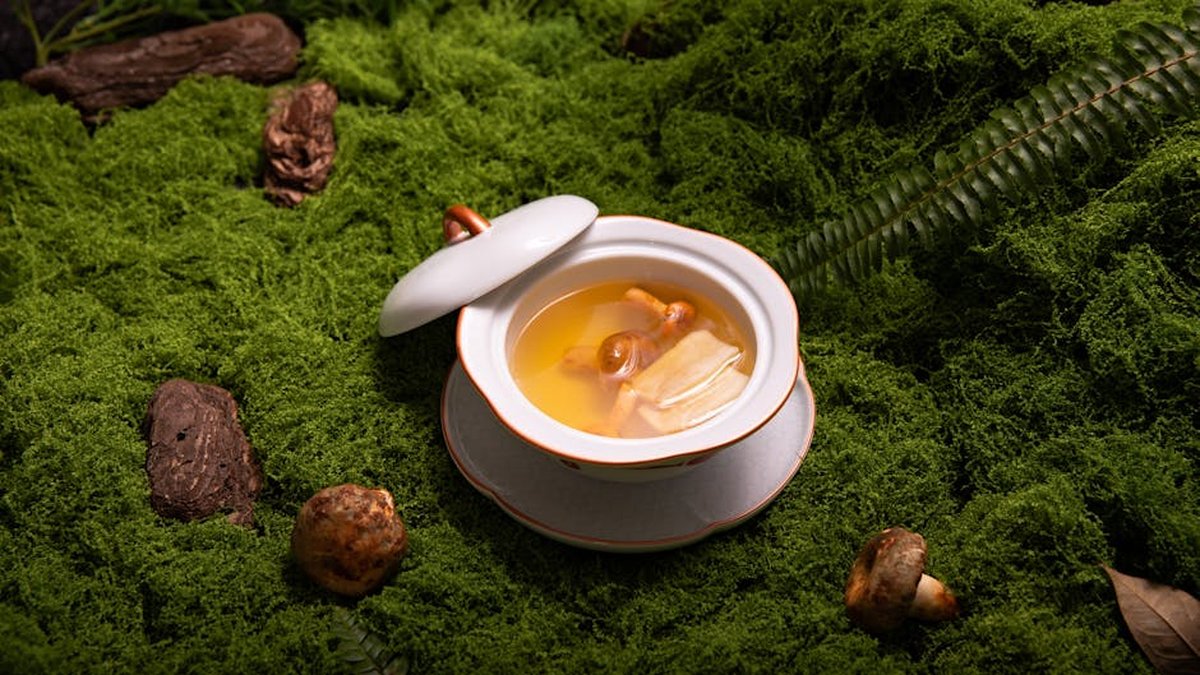
Photo by Vu_Pham on Pixabay
This article is for educational purposes only and does not constitute medical advice. Consult a qualified TCM practitioner before making dietary changes based on traditional Chinese medicine principles.
Why Western and Chinese Medicine See Fatigue Differently
You're exhausted. You sleep 8 hours and wake up tired. Coffee helps for an hour, then the crash hits harder. Your blood work comes back normal. Your doctor says "get more sleep" or "try reducing stress."
This is where millions of people get stuck. Western medicine defines fatigue by what it isn't — not anemia, not thyroid disease, not sleep apnea. When tests are negative, the conversation often stalls.
Chinese medicine starts from the opposite direction. It defines fatigue by what it is. And it identifies at least five distinct patterns, each with different causes, different symptoms, and — crucially — different food remedies.
The Huangdi Neijing (《黄帝内经》) addressed fatigue directly over 2,000 years ago, describing it as a dysfunction of the Spleen-Stomach system's ability to transform food into usable energy (Qi). The text states: "脾胃者,仓廪之官" — the Spleen and Stomach are the officials of the granary. When the granary is weak, the whole kingdom (body) suffers.
Modern Chinese clinical research backs this up. A study from the Guangzhou University of Chinese Medicine involving 856 patients with chronic fatigue found that 67.4% had Qi Deficiency as their primary or secondary pattern. Spleen-related dysfunction was present in 73.8% of cases. This means that for most people with unexplained fatigue, the answer lies in strengthening the digestive system and rebuilding Qi — and food therapy is the first-line approach.
The 5 TCM Fatigue Patterns: Which One Are You?
Pattern 1: Qi Deficiency Fatigue (气虚型疲劳)
Who gets it: People who overwork without adequate rest. Those who eat irregularly or eat mostly cold, raw food. Chronic dieters. Post-illness recovery. Mothers in the postpartum period.
How it feels:
- Persistent tiredness that rest only partially helps
- Shortness of breath on mild exertion — climbing stairs, carrying groceries
- Spontaneous sweating (you sweat without exerting yourself, especially during the day)
- Catches colds easily and recovers slowly
- Soft, quiet voice
- Loose stools or poor appetite
- Pale tongue with teeth marks on the edges
Why it happens (TCM explanation): The Spleen's Qi is insufficient to transform food into energy. It's like a furnace with dying embers — food goes in, but not enough fire to convert it into usable fuel.
The food therapy approach: Warm, cooked, sweet-flavored foods that directly tonify Spleen Qi. This is not the time for salads, smoothies, or intermittent fasting.
Pattern 2: Yang Deficiency Fatigue (阳虚型疲劳)
Who gets it: Older adults. People who live in cold climates. Those who've been ill for a long time. People who consumed excessive cold food and drinks over years. The evolution from untreated Qi Deficiency.
How it feels:
- Everything in Qi Deficiency, PLUS:
- Cold hands and feet that don't warm up
- Aversion to cold — always adding layers, always seeking warmth
- Low back pain and weak knees
- Frequent nighttime urination
- Low libido
- Pale, puffy tongue with wet coating
Why it happens: Yang Deficiency is Qi Deficiency that's progressed deeper. Not only is the furnace low, but the fire itself is guttering. The body lacks warming energy at a fundamental level.
The food therapy approach: Warming foods that reignite Yang fire — lamb, ginger, cinnamon, leeks, walnuts. More aggressive warming than Qi Deficiency alone requires.
Pattern 3: Blood Deficiency Fatigue (血虚型疲劳)
Who gets it: Women with heavy menstruation. Post-surgical patients. People with chronic blood loss (GI issues). Vegetarians and vegans who don't supplement carefully. Those who overwork their eyes (excessive screen time depletes Liver Blood in TCM).
How it feels:
- Fatigue with dizziness, especially on standing up
- Pale, dull complexion — sometimes with a yellowish tinge
- Dry skin, brittle nails, thinning hair
- Blurred vision, floaters
- Insomnia — specifically difficulty falling asleep, or waking with vivid dreams
- Heart palpitations
- Numbness or tingling in extremities
- Pale tongue, thin pulse
Why it happens: Blood in TCM does more than carry oxygen. It nourishes every tissue, anchors the spirit (神), and moistens the body. When Blood is deficient, tissues dry out, the mind becomes unsettled, and energy drops because there's not enough Blood to carry Qi to where it's needed.
The food therapy approach: Dark-colored, iron-rich, and Blood-nourishing foods. Red meat, liver, dark leafy greens, red dates, longan, black sesame.
Pattern 4: Yin Deficiency Fatigue (阴虚型疲劳)
Who gets it: Night-shift workers. People who sleep less than 6 hours chronically. Those recovering from febrile illnesses. Menopausal women. People in high-stress, high-output careers who "burn the candle at both ends."
How it feels:
- Fatigue paradoxically combined with a wired, restless feeling — "tired but can't relax"
- Afternoon energy crashes (the "3pm slump" is classic Yin Deficiency in TCM)
- Night sweats
- Hot palms, hot soles, feeling of internal heat
- Dry mouth and throat, especially at night
- Insomnia — specifically waking up between 1-3am (Liver Yin time)
- Red tongue with little coating
Why it happens: Yin is the cooling, moistening, calming aspect of the body. Chronic sleep deprivation, overwork, and excessive heat (from stress, stimulants, or climate) burns through Yin reserves. Without adequate Yin, Yang becomes relatively excessive — creating heat, dryness, and restless agitation even as energy reserves deplete.
The food therapy approach: Cooling, moistening foods that rebuild Yin fluid — duck, pork, tremella mushroom, goji berries, pear, black sesame. Avoid stimulants and hot, spicy foods that further deplete Yin.
Pattern 5: Dampness and Phlegm Fatigue (痰湿型疲劳)
Who gets it: Overweight individuals. People who eat excessive sugar, dairy, greasy food, and processed food. Those living in humid climates. Heavy alcohol drinkers. People with sedentary lifestyles.
How it feels:
- Heavy, sluggish fatigue — "like wearing a wet blanket"
- Brain fog, difficulty concentrating
- Feeling of heaviness in the limbs and head
- Bloating after eating
- Excessive phlegm, especially in the morning
- Oily skin and scalp
- Thick, greasy tongue coating
- The fatigue is WORSE after eating (unlike Qi Deficiency, where eating helps)
Why it happens: The Spleen can't process incoming fluids and food properly, creating an accumulation of "dampness" — metabolic waste that clogs the system. It's like a drainage system backed up with sludge. Energy can't flow because pathways are blocked.
The food therapy approach: Light, draining, aromatic foods that resolve dampness — barley, adzuki beans, tangerine peel, celery. AVOID the sweet, rich, heavy tonics that help Qi Deficiency — they make Dampness worse. This distinction is critical.
The Foods That Fight Fatigue: Organized by Pattern
For Qi Deficiency Fatigue
Tier 1 — The Daily Essentials:
| Food | How to Use | Why It Works |
|---|---|---|
| Astragalus (黄芪) | 10-15g daily tea, or add to soups | The primary Qi-tonifying herb. Raises Spleen and Lung Qi. Strengthens the immune "exterior" |
| Chinese yam (山药) | Steamed, in soups, or as congee | Neutral temperature — safe for all types. Simultaneously tonifies Spleen Qi, Lung Qi, and Kidney Yin |
| Red dates (大枣) | 3-5 daily in tea or soups | Tonifies Spleen Qi, nourishes Blood, harmonizes other ingredients |
| Chicken (especially hen/母鸡) | Slow-simmered soup, 2-3x per week | The most important Qi-tonifying meat. Warms the Middle Burner without creating excess heat |
| Millet (小米) | Breakfast congee | Called "the grain of the Spleen" — gentle, warming, easy to digest |
Tier 2 — Supporting Players:
- Codonopsis root (党参): Gentler than ginseng, perfect for daily use. Add 10-15g to any soup. Known as "poor person's ginseng" because it's affordable and nearly as effective for food therapy
- Shiitake mushrooms (香菇): Tonify Qi through the Spleen. Add to soups, stir-fries, congee
- Sweet potato: Warm, sweet, Spleen-nourishing. Replace cold cereal with baked sweet potato for breakfast
- Honey: Tonifies Qi, moistens, and harmonizes. Add to warm (not hot) water as a morning drink
- White lentils (白扁豆): Strengthen the Spleen and drain mild dampness. Add to soups and congees
The Foundational Qi Tonic Tea (黄芪红枣枸杞茶): Astragalus 10g + red dates 5 (pitted) + goji berries 10g. Simmer in 800-1000ml water for 20-30 minutes. Drink throughout the day. This is the single most widely recommended daily formula for Qi Deficiency across Chinese health platforms and TCM clinics. Research shows this combination enhances macrophage activity, increases IgA production, and improves subjective energy scores in clinical trials.
For Yang Deficiency Fatigue
Everything in the Qi Deficiency list, PLUS:
| Food | How to Use | Why It Works |
|---|---|---|
| Lamb (羊肉) | Stewed with ginger, 2-3x per week in winter | The most Yang-warming common meat. Has been prescribed for Yang Deficiency since the Han Dynasty |
| Fresh ginger (生姜) | Add to every cooked dish. Ginger tea daily | Warms the Middle Burner, disperses cold, assists Yang Qi circulation |
| Leeks (韭菜) | Stir-fried, in dumplings, in egg dishes | Called "起阳草" (Yang-raising grass) — specifically warms Kidney Yang |
| Walnuts (核桃) | 3-5 daily as snack, or in congee | Warms the Kidneys, nourishes the brain. "Shape treats shape" — walnuts look like brains |
| Cinnamon bark (肉桂) | Small amounts in cooking, or cinnamon tea | Ignites Kidney Yang fire. Use sparingly — it's potent |
The Classic Yang Tonic Soup — Angelica and Lamb Stew (当归生姜羊肉汤): This 2,000-year-old recipe from Zhang Zhongjing's Jinkui Yaolue remains the gold standard. Lamb 500g + Angelica 15g + ginger 30g, simmered 2.5 hours. See our herbal soup recipes for the full method.
For Blood Deficiency Fatigue
| Food | How to Use | Why It Works |
|---|---|---|
| Pork liver (猪肝) | Quick-cooked in soup (3-4 min only), 1-2x per week | "Like treats like" — liver nourishes the Liver. Extremely high in bioavailable iron |
| Longan fruit (桂圆) | In tea, congee, or as a snack | The top Blood-nourishing fruit in TCM. Also calms the spirit and improves sleep |
| Black sesame (黑芝麻) | Ground into paste, added to congee, or as sesame candy | Nourishes Liver Blood and Kidney Yin. Addresses dry skin, hair loss, and blurred vision |
| Spinach (菠菜) | Blanched or in soup | Blood-nourishing and moistening. One of the few vegetables specifically recommended for Blood Deficiency |
| Red meat (beef) | Moderate amounts, 2-3x per week | Tonifies Qi and Blood. TCM doesn't share the Western bias against red meat for Blood-deficient patients |
The Blood-Building Congee (补血粥): Black rice 50g + red dates 8 (pitted) + longan 15g + goji berries 10g + brown sugar 1 tablespoon. Cook as porridge for 1 hour. Eat for breakfast 3-4 times per week. Black rice nourishes Kidney and Blood, red dates and longan build Blood directly, goji nourishes Liver Blood. This breakfast congee addresses Blood Deficiency from multiple angles simultaneously.
For Yin Deficiency Fatigue
| Food | How to Use | Why It Works |
|---|---|---|
| Duck (鸭肉) | Soup, braised, or roasted | The only common cooling meat. Nourishes Yin without creating dampness |
| Tremella mushroom (银耳) | Sweet soup, simmered 1.5+ hours | Moistens the Lungs, nourishes Yin, generates fluids. Polysaccharides support hydration |
| Goji berries (枸杞) | Daily in tea, soup, congee, or as snack | Nourishes Liver and Kidney Yin. A 2011 study showed 28 days of goji consumption increased plasma zeaxanthin by 26% |
| Pear (梨) | Raw, steamed, or in sweet soup | Directly moistens the Lungs and generates fluids. Best in autumn but useful year-round for Yin Deficiency |
| American ginseng (西洋参) | 3-5g sliced, steeped as tea | Unlike Asian ginseng (which is warming), American ginseng tonifies Qi AND nourishes Yin simultaneously — the ideal herb for the "tired but wired" pattern |
The Yin-Nourishing Sweet Soup (养阴甜汤): Tremella 1 piece (soaked, torn) + pear 2 (cubed) + lily bulb 20g + lotus seed 20g + goji 10g + rock sugar 15g. Simmer 1.5 hours. This addresses Yin Deficiency fatigue from the Lung, Heart, and Kidney levels simultaneously. Drink 3-4 times per week, especially in the afternoon when Yin-Deficient fatigue peaks.
For Dampness Fatigue
| Food | How to Use | Why It Works |
|---|---|---|
| Job's tears barley (薏苡仁) | Soup with adzuki beans, or as congee | The #1 dampness-draining food. Research shows anti-inflammatory effects comparable to mild NSAIDs |
| Adzuki beans (赤小豆) | Combined with barley in soup | Drains dampness, promotes urination, reduces edema |
| Tangerine peel (陈皮) | Added to any soup or tea | Transforms dampness, moves Qi, strengthens the Spleen. The aromatic compounds cut through phlegm |
| Winter melon (冬瓜) | In soup with duck or pork ribs | Clears heat and drains dampness. Low calorie, high water content |
| Pu-erh tea (普洱茶) | Daily after meals | Fermented tea that aids digestion and resolves dampness. Guangdong culture drinks it specifically to cut grease |
The Dampness-Draining Daily Drink (薏米赤小豆水): Job's tears 50g + adzuki beans 50g, soaked overnight, simmered 1.5 hours. Drink the liquid throughout the day, eat the beans. Add tangerine peel for extra dampness resolution. This is the most widely recommended daily recipe for Phlegm-Damp patterns across Chinese wellness culture. IMPORTANT: do NOT add regular rice — rice is considered damp in TCM and counteracts the draining effect.
Recipes That Target Fatigue Directly
Recipe 1: Four Gentlemen Congee (四君子粥)
Best for: Qi Deficiency fatigue — the foundational formula
Ingredients:
- Ginseng or codonopsis (党参), 10g
- White atractylodes (白术), 10g
- Poria (茯苓), 10g
- Licorice root (甘草), 5g
- Rice, 100g
Method:
- Simmer the four herbs in 1L water for 30 minutes. Strain.
- Use the herbal liquid to cook rice into a soft porridge (add more water as needed)
- Cook for 45 minutes until thick and creamy
Why it works: This is the "Four Gentlemen Decoction" (四君子汤) — arguably the most important Qi-tonifying formula in the entire TCM pharmacopoeia — adapted into a food. The original formula dates to the Song Dynasty's Taiping Huimin Hejiju Fang (《太平惠民和剂局方》, 1107 CE). Codonopsis tonifies Spleen Qi, atractylodes strengthens the Spleen and dries dampness, poria drains dampness and calms the spirit, licorice harmonizes everything. Nearly a thousand years later, this formula is still prescribed daily in TCM hospitals across China.
Recipe 2: Ginseng and Chicken Energy Soup (参鸡汤)
Best for: Severe Qi Deficiency, post-illness recovery, chronic fatigue syndrome
Ingredients:
- Whole young chicken or Cornish hen, 1
- Ginseng root (人参), 10g (or codonopsis 15g for daily use)
- Astragalus, 15g
- Red dates, 8
- Goji berries, 15g
- Glutinous rice, 50g (stuffed inside the chicken)
- Ginger, 4 slices
- Salt to taste
Method:
- Clean chicken, stuff cavity with soaked glutinous rice, ginseng, and 3 red dates
- Place in pot with remaining ingredients and 2L water
- Bring to boil, reduce to lowest simmer for 2.5-3 hours
- Season with salt
Why it works: This is the Chinese version of Korean samgyetang — though the Chinese tradition of ginseng chicken soup predates the Korean version. Ginseng is the most powerful Qi-tonifying substance in TCM. Combined with astragalus (which tonifies Qi at the Spleen-Lung level) and chicken (which warms the Middle Burner), this is the most potent food therapy approach for severe energy depletion. Chinese TCM hospitals commonly recommend this soup for post-surgery recovery, post-COVID fatigue, and chronic fatigue syndrome.
Recipe 3: Eight Treasure Congee (八宝粥)
Best for: Mixed Qi and Blood Deficiency — the "covers all bases" approach
Ingredients:
- Glutinous rice, 50g
- Red dates, 5
- Longan, 10g
- Lotus seed, 15g
- Goji berries, 10g
- Chinese yam (dried), 15g
- Barley, 15g
- Red bean, 20g
- Rock sugar, to taste
Method:
- Soak barley, red beans, and lotus seeds overnight
- Combine all ingredients except goji berries in pot with 1.5L water
- Bring to boil, reduce to low simmer for 1.5 hours
- Add goji berries and rock sugar in last 5 minutes
- Should be thick, creamy, fragrant
Why it works: Eight Treasure Congee is one of China's most traditional health foods, consumed especially during the Laba Festival (腊八节, 8th day of 12th lunar month). Each of the eight ingredients targets a different aspect of energy production: rice provides the Qi base, dates and longan build Blood, lotus seed calms the spirit, yam strengthens the Spleen, barley drains dampness, red bean nourishes Blood and drains edema, and goji nourishes Liver-Kidney Yin. It's the most balanced anti-fatigue food therapy preparation in the tradition.
Lifestyle Factors TCM Considers Equally Important
Food therapy for fatigue doesn't work in isolation. TCM identifies several lifestyle factors that directly cause or worsen fatigue:
1. Irregular eating patterns. The Spleen operates on rhythm. Eating at consistent times trains the digestive system to produce enzymes and Qi efficiently. Skipping breakfast, eating late dinners, or grazing constantly all weaken Spleen Qi over time. The traditional Chinese eating schedule — substantial breakfast by 7-9am (Stomach Qi peak), largest meal at noon, lighter dinner before 7pm — aligns with TCM organ clock theory.
2. Overthinking (思虑过度). TCM specifically identifies excessive mental work as a cause of Spleen Qi Deficiency. The Spleen "houses thought" (脾主思), and chronic overthinking, worry, and mental overwork directly deplete Spleen Qi. This explains the fatigue epidemic among knowledge workers.
3. Cold food and drink habits. Chronically consuming cold and raw food — iced water, smoothies, raw salads, ice cream — directly damages Spleen Yang over time. The Spleen needs warmth to transform food. In TCM clinical practice, switching from cold to warm food and drink often produces noticeable energy improvement within 1-2 weeks, before any herbal intervention.
4. Inadequate rest during the right hours. TCM's organ clock places Liver Blood replenishment between 1-3am. People who regularly stay past midnight, even if they sleep 8 hours total, miss this critical repair window. Chronic late sleeping depletes Liver Blood and Kidney Yin — leading to the "tired but wired" Yin Deficiency pattern.
5. Lack of gentle movement. TCM doesn't prescribe intense exercise for fatigue — that depletes already-low Qi. Instead, it recommends gentle, Qi-circulating practices: tai chi, qigong (especially Eight Brocades/八段锦), and slow walking. These move Qi without consuming it. A clinical study from Shanghai University of TCM showed that 12 weeks of Baduanjin practice improved fatigue scores by 31% in participants with chronic fatigue.
When Food Therapy Isn't Enough
Food therapy is first-line treatment for mild to moderate fatigue. But recognize when to escalate:
- If fatigue persists after 4-6 weeks of consistent food therapy and lifestyle adjustment, see a TCM practitioner for herbal formula prescription
- If fatigue comes with unexplained weight loss, fever, or blood in stool, see a Western medicine doctor immediately — these are red flags
- If fatigue started after a specific illness (like COVID), consider both TCM herbal medicine and Western medical evaluation
- Severe Blood Deficiency with hemoglobin below normal range needs medical treatment, not just food therapy
The Constitution Quiz helps identify your fatigue pattern. The Seasonal Planner tells you which fatigue-fighting foods are most appropriate for the current season. And the Ingredient Lookup lets you check any food's properties before adding it to your routine.
Frequently Asked Questions
How quickly can food therapy improve my fatigue?
Most people notice subtle improvements — better morning energy, fewer afternoon crashes, improved digestion — within 2-3 weeks of consistent practice. Deeper improvement in stamina, cold tolerance, and immune function typically takes 6-12 weeks. Qi Deficiency responds fastest to food therapy. Yin Deficiency takes longest because Yin fluids rebuild slowly. Dampness fatigue can improve quickly once you stop eating damp-producing foods.
Can I combine foods from different fatigue patterns?
Yes, but with caution. Many people have mixed patterns — Qi Deficiency with Dampness is extremely common. The rule: identify your primary pattern and focus 70% of your food therapy there. Layer in secondary pattern foods for the remaining 30%. Do NOT combine warming Yang tonic foods with cooling Yin-nourishing foods in large amounts in the same meal — they partially cancel each other out.
Does TCM food therapy for fatigue conflict with coffee consumption?
TCM doesn't prohibit coffee, but considers it warm and drying. For Qi Deficiency and Yang Deficiency, moderate coffee (1-2 cups) is acceptable — it temporarily boosts Qi circulation. For Yin Deficiency, coffee worsens the condition by creating more heat and drying fluids — green tea or American ginseng tea is a better choice. For Dampness fatigue, Pu-erh tea is preferred over coffee. In all cases, never drink coffee on an empty stomach — it damages Stomach Qi.
Is Chinese food therapy for fatigue backed by research?
Chinese medical universities have published extensive research. The Guangzhou study of 856 chronic fatigue patients showed 67.4% had Qi Deficiency patterns. Clinical trials of astragalus-based formulas demonstrate significant improvements in immune markers and subjective energy scores. Baduanjin (qigong) studies show measurable fatigue reduction. However, most research is published in Chinese-language journals with smaller sample sizes than Western RCT standards demand. The evidence base is substantial but not yet at the level of Western pharmaceutical trials.
What's the single most important dietary change for fatigue?
Stop drinking cold water and eating cold, raw food. Switch to warm or room-temperature water and cooked meals. This single change — which costs nothing and requires no special ingredients — addresses the most common dietary cause of Spleen Qi weakness. TCM practitioners report that patients who make this switch often notice improved energy within 1-2 weeks, before any herbal supplementation begins. It sounds too simple. Try it for two weeks and see.
Related Reading
- The 9 TCM Body Constitutions: What Chinese Medicine Says About Your Diet
- Red Dates, Goji Berries, and Astragalus: China's Top 10 Medicinal Foods
- Chinese Herbal Soups for Every Season
— The Yao Shan Guide Team