Chinese Food Therapy for Pregnancy and Postpartum: The 坐月子 Diet
- 坐月子 (zuo yue zi, "sitting the month") is a 30–40 day postpartum recovery period where Chinese mothers follow strict dietary protocols to restore qi, blood, and organ function after childbirth

Photo by xiuqilong on Pixabay
Quick Answer
- 坐月子 (zuo yue zi, "sitting the month") is a 30–40 day postpartum recovery period where Chinese mothers follow strict dietary protocols to restore qi, blood, and organ function after childbirth
- The postpartum diet progresses through four stages — clearing (排), tonifying (补), strengthening (壮), and nourishing (养) — each with specific foods designed to support sequential recovery
- A 2023 study from Peking University found that women who followed TCM postpartum dietary protocols had 32% faster recovery of hemoglobin levels compared to those following standard dietary advice
- Monthly postpartum meal delivery services (月子餐) have become a ¥50 billion (~$7 billion USD) industry in China, with average costs of ¥8,000–30,000 (~$1,120–4,200 USD) for a 30-day program
Understanding 坐月子: More Than Just Resting
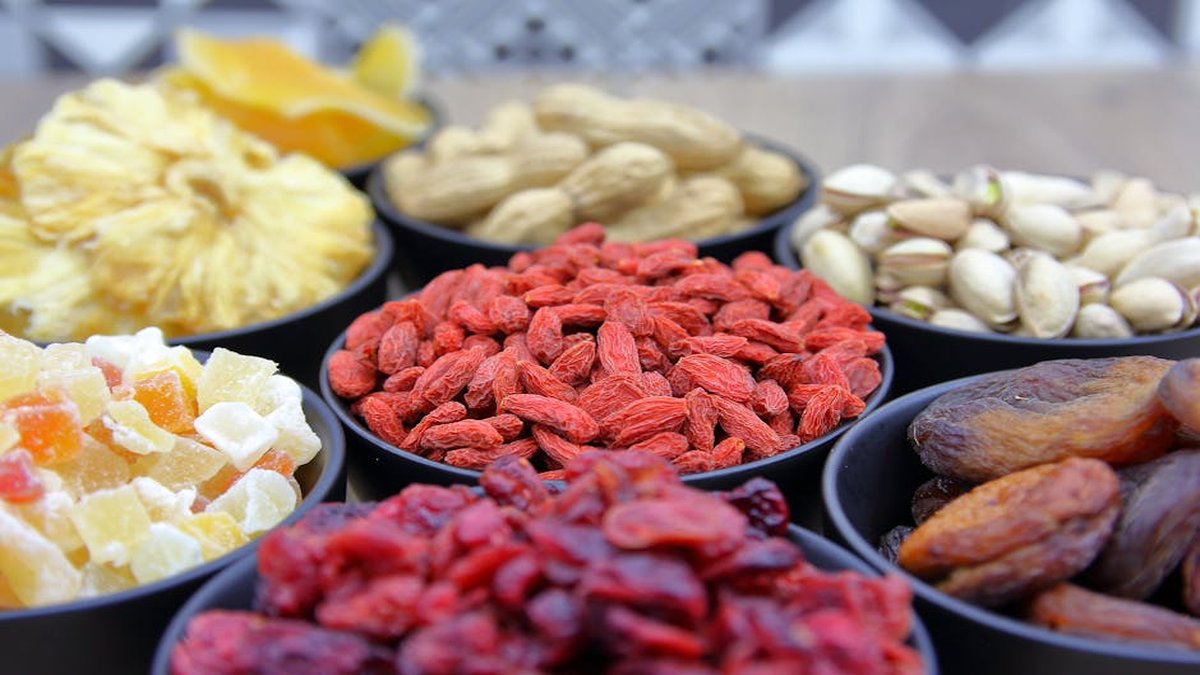
坐月子 is one of the most distinctive practices in Chinese culture. For 30–40 days after giving birth, a new mother enters a state of protected recovery — limiting physical activity, avoiding cold exposure (in all forms), and eating specific foods designed to help the body rebuild what pregnancy and delivery depleted.
To Western observers, 坐月子 can seem restrictive or even unnecessary. But from a TCM perspective, childbirth is one of the most qi- and blood-depleting events a body can experience. The uterus contracts from the size of a watermelon back to a fist. Blood loss during delivery ranges from 200–500ml (vaginal) to 500–1000ml (cesarean). Hormone levels plummet. The entire organ system needs rebuilding.
TCM views this recovery window as critical: if the mother doesn't properly restore qi, blood, and organ function during this period, the deficiency patterns can persist for years — manifesting as chronic fatigue, lower back pain, cold sensitivity, joint problems, and even depression.
Modern Chinese families take this seriously. According to a 2024 survey by China's National Health Commission, 87% of Chinese mothers observe some form of 坐月子 dietary protocol. The practice has evolved from folk tradition into a professional industry — 月子中心 (postpartum recovery centers) in Beijing and Shanghai charge ¥50,000–200,000 (~$7,000–28,000 USD) for a 28-day stay with personalized TCM dietary plans.
The TCM Physiology of Postpartum Recovery
What Pregnancy and Delivery Deplete
Blood (血): Pregnancy requires enormous blood volume expansion (about 1.5 liters of additional blood by the third trimester). Delivery involves significant blood loss. TCM views this as blood deficiency (血虚) — the body's circulation and nourishment capacity is depleted.
Qi (气): The physical exertion of labor, combined with blood loss (blood carries qi), creates qi deficiency. This manifests as extreme fatigue, weak voice, shortness of breath, and poor appetite.
Kidney Essence (肾精): Pregnancy draws heavily on kidney essence to form the fetus. TCM considers kidney essence the body's deepest reserve — harder to replenish than qi or blood. Postpartum kidney depletion contributes to lower back pain, hair loss, loose teeth, and bone density concerns.
Spleen Yang (脾阳): Digestion weakens during late pregnancy (the enlarged uterus compresses digestive organs) and remains weak postpartum. Cold foods or heavy meals during this period can damage spleen yang, leading to poor milk production and slow recovery.
The Critical Recovery Window
TCM postpartum theory divides recovery into four phases, each lasting approximately one week. The dietary approach progresses from gentle cleansing to aggressive nourishment. Getting the sequence wrong — eating heavy tonic foods too early, for instance — can cause bloating, breast engorgement, or 恶露 (lochia) retention.
This sequential approach is backed by some modern evidence. Research from Shanghai Jiao Tong University School of Medicine (2023) found that women who followed a staged postpartum diet had 24% better uterine involution rates at 4 weeks postpartum compared to those who ate heavy nourishing foods from day one.
The Four Stages of Postpartum Food Therapy
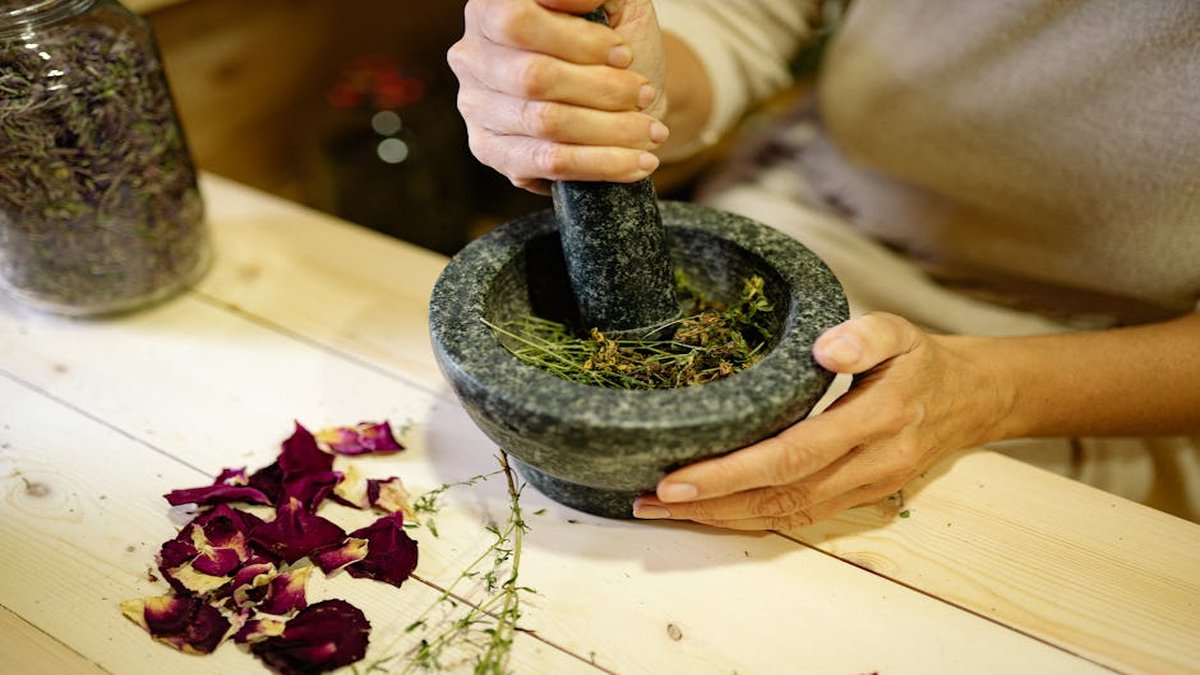
Stage 1: Weeks 1 — 排 (Clearing/Expelling)
Focus: Clear 恶露 (lochia — postpartum uterine discharge), reduce swelling, support uterine contraction. Do NOT heavily nourish yet — the uterus is still clearing out, and too much nourishing food can cause stagnation.
Key foods:
- Sheng Hua Tang (生化汤) — the signature postpartum herbal formula. Contains angelica root (当归), Sichuan lovage (川芎), peach kernel (桃仁), roasted ginger (炮姜), and licorice (甘草). Promotes blood circulation and helps expel lochia. Typically consumed 5–7 days post-delivery.
- Light rice congee with a few red dates
- Pig's liver stir-fried with sesame oil and ginger (猪肝麻油姜) — clears lochia and begins blood rebuilding
- Mild vegetable soups
Foods to avoid in Stage 1:
- Heavy tonic meats (chicken, lamb) — too nourishing, can cause stagnation
- Cold foods of any kind — cold drinks, raw fruit, cold-natured vegetables
- Greasy or fried foods — spleen is too weak to process
- Ginseng and astragalus — their qi-tonifying properties can hold lochia in rather than letting it expel
Sample Stage 1 Daily Menu:
- Breakfast: Thin rice congee with 2 red dates
- Mid-morning: Sheng Hua Tang (1 dose)
- Lunch: Pig's liver with ginger and sesame oil, steamed rice
- Afternoon: Warm longan tea
- Dinner: Fish soup with tofu and ginger
Stage 2: Week 2 — 调 (Regulating)
Focus: Begin strengthening the spleen and stomach. Improve digestion to prepare the body for heavier nourishment in Stage 3. Start gentle blood-tonifying.
Key foods:
- Pork kidney soup (猪腰汤) with du zhong (杜仲, eucommia bark) — strengthens the lower back and kidney yang, a classic postpartum restorative. The combination addresses the lower back pain that's almost universal after delivery.
- Pork rib and Chinese yam soup (排骨山药汤) — strengthens the spleen
- Millet congee (小米粥) — the premier spleen-nourishing grain in TCM
- Steamed eggs with warm soy milk
Sample Stage 2 Daily Menu:
- Breakfast: Millet congee with goji berries
- Mid-morning: Warm soy milk
- Lunch: Pork kidney and du zhong soup, steamed vegetables, rice
- Afternoon: Red date and longan tea
- Dinner: Fish congee with ginger
Stage 3: Week 3 — 补 (Heavy Tonifying)
Focus: Aggressively nourish qi and blood. This is when the heavy-hitting tonic foods enter. The digestive system should now be strong enough to absorb them.
Key foods:
- Sesame oil chicken (麻油鸡) — THE iconic 坐月子 dish. Chicken nourishes qi and blood. Sesame oil warms the channels. Old ginger (老姜) dispels cold and activates circulation. The combination is considered the single most important postpartum food in Chinese culture.
- Black chicken soup (乌鸡汤) with astragalus and angelica — black chicken is considered more nourishing than white chicken, with additional kidney-tonifying properties
- Pork trotter and peanut soup (猪蹄花生汤) — promotes lactation
- Red bean and red date porridge (红豆红枣粥) — blood-building
Sample Stage 3 Daily Menu:
- Breakfast: Black sesame paste (芝麻糊) with walnut
- Mid-morning: Peanut and red date milk
- Lunch: Sesame oil chicken with rice noodles
- Afternoon: Papaya fish soup (to promote milk production)
- Dinner: Black chicken soup with astragalus and goji berries
Stage 4: Week 4+ — 养 (Sustained Nourishing)
Focus: Continue nourishing while gradually returning to normal eating. Focus on kidney essence replenishment and sustained energy.
Key foods:
- Continue bone broths and collagen-rich soups
- Black foods for kidney nourishment — black sesame, black beans, mulberries
- Lamb stew (for those with cold constitutions)
- Gradually reintroduce fruits (warm-natured first: longan, lychee, cherry)
- Begin gentle exercise to restore qi flow
This is also when sweet soups (糖水) enter the postpartum diet — fermented rice wine with glutinous rice balls (酒酿圆子) is a traditional lactation-boosting dessert.
Essential Postpartum Recipes
Sesame Oil Chicken (麻油鸡)
The most important 坐月子 recipe. Families throughout Taiwan, southern China, and Southeast Asian Chinese communities prepare this daily during the postpartum month.
Ingredients:
- Free-range chicken — 1/2, cut into pieces (bone-in for collagen extraction)
- Sesame oil (麻油) — 3 tablespoons (use pure black sesame oil for authentic flavor)
- Old ginger (老姜) — 50g, sliced thick
- Rice wine (米酒) — 200ml (cooking-grade rice wine, or substitute with rice cooking wine)
- Water — 500ml
Method:
- Heat sesame oil in a clay pot or heavy-bottomed pan over medium heat.
- Add ginger slices, fry until edges curl and become fragrant (3–5 minutes). The ginger must be old ginger — young ginger lacks the warming potency needed for postpartum recovery.
- Add chicken pieces, stir-fry with the ginger until the surface is sealed (5 minutes).
- Add rice wine and water. Bring to boil, then reduce to low simmer.
- Simmer for 30–40 minutes until chicken is tender and falling off the bone.
- Do not add salt — salt is restricted during the early postpartum period because TCM views it as descending and draining, counteracting the ascending, building energy the body needs.
Cost: Approximately ¥25 per serving (~$3.50 USD).
Pork Trotter and Peanut Lactation Soup (猪蹄花生通乳汤)
The go-to soup for insufficient breast milk.
Ingredients:
- Pork trotters (猪蹄) — 1, split and blanched
- Raw peanuts (花生) — 50g
- Red dates — 5
- Fresh ginger — 20g, sliced
- Water — 1.5 liters
- Salt — minimal
Method:
- Blanch pork trotters in boiling water for 3 minutes, drain and rinse.
- Add trotters, peanuts, red dates, and ginger to clay pot with water.
- Bring to boil, then simmer 2–3 hours until trotters are completely tender and the soup is milky white (the collagen has emulsified).
TCM rationale: Pork trotters are rich in collagen and classified as a blood-nourishing food. Peanuts strengthen the spleen and generate milk. The milky white color of the finished soup is considered a visual indicator of its lactogenic properties. According to clinical guidelines from the China Association of Chinese Medicine, pork trotter soup consumed twice daily increases breast milk volume by an average of 30% within 3 days.
Cost: Approximately ¥20 per serving (~$2.80 USD).
Black Chicken Qi-Blood Restoration Soup (乌鸡补气养血汤)
Ingredients:
- Black-bone chicken (乌鸡) — 1/2 bird
- Astragalus (黄芪) — 15g
- Angelica root (当归) — 10g
- Codonopsis (党参) — 10g
- Goji berries — 10g
- Red dates — 5
- Fresh ginger — 15g
- Water — 1.5 liters
Method:
- Blanch chicken, rinse.
- Add all ingredients to pot with water.
- Bring to boil, then simmer 2 hours.
- Season with a tiny pinch of salt.
Cost: Approximately ¥30 per serving (~$4.20 USD) — black chicken is more expensive than standard chicken, typically ¥30–50 per half bird.
Pregnancy Food Therapy (Before Delivery)
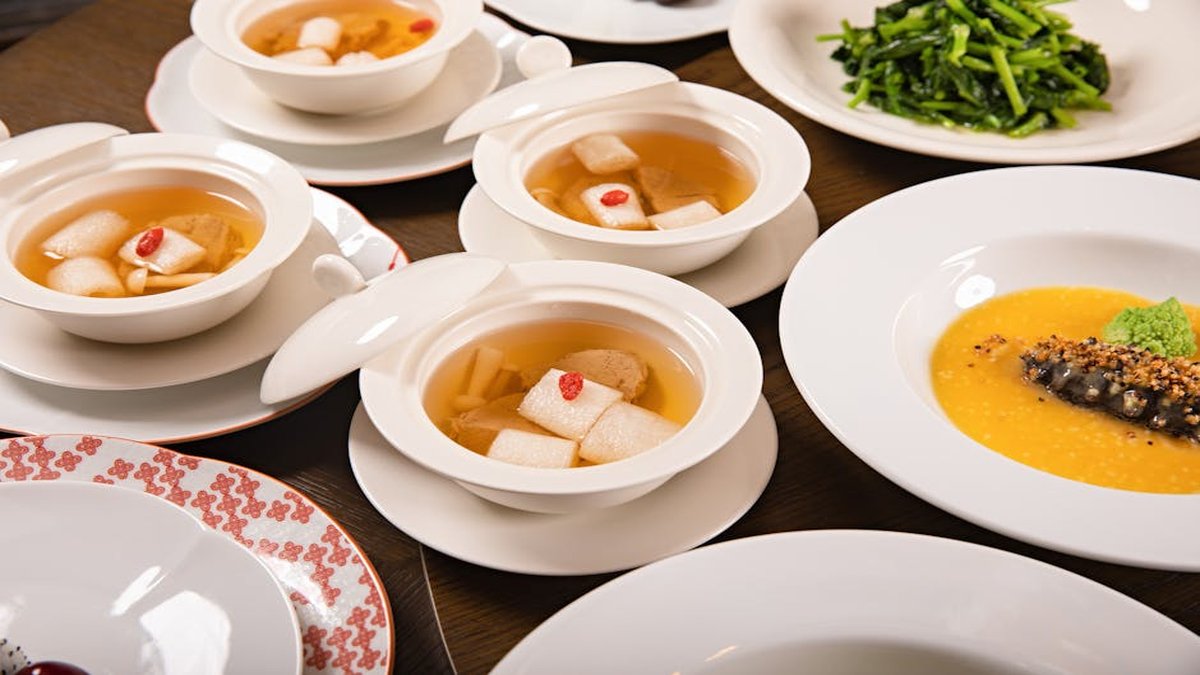
TCM food therapy for pregnancy focuses on three goals: nourishing fetal development, preventing common pregnancy complications, and preparing the body for delivery.
Trimester 1 (Months 1–3): Protect and Calm
Focus: Prevent miscarriage (安胎), calm morning sickness, nourish kidney essence
Key foods:
- Bland, easily digestible: congee, steamed buns, crackers
- Ginger tea (small amounts) for nausea — 3–4 slices in hot water
- Walnuts and black sesame (kidney nourishment for fetal brain development)
- Avoid: blood-moving foods (hawthorn, peach kernel, angelica root), crab, cold foods
Trimester 2 (Months 4–6): Nourish and Build
Focus: Support fetal growth, prevent anemia, strengthen spleen for increased nutritional demands
Key foods:
- Red dates and goji berry tea (daily — blood nourishment)
- Fish soup (protein + DHA for fetal brain development)
- Chinese yam (山药) — strengthens spleen for better nutrient absorption
- Bone broth (calcium for fetal skeleton)
Trimester 3 (Months 7–9): Prepare for Delivery
Focus: Build blood reserves for delivery, prevent edema, prepare the uterus
Key foods:
- Red bean soup (clears edema — a study from Zhejiang University found red bean consumption reduced third-trimester edema by 37%)
- Corn silk tea (利尿消肿 — promotes urination to reduce swelling)
- Continue bone broth and fish soup
- Reduce meal sizes but increase frequency (5–6 small meals) as the uterus compresses the stomach
Foods to avoid throughout pregnancy:
- Hawthorn (山楂) — strongly contracts the uterus, contraindicated
- Barley/Job's tears (薏仁) in large amounts — traditionally considered to promote uterine contraction
- Crab — classified as very cold, associated with miscarriage risk in TCM
- Excessive ginseng — can cause nosebleeds and elevated blood pressure
- Alcohol — including rice wine until postpartum Stage 3
For a broader overview of women's health through food therapy, see our women's health guide.
Modern Adaptations of 坐月子 Diet
The traditional 坐月子 diet has evolved. Many modern Chinese mothers follow modified protocols that retain the TCM framework while accommodating contemporary nutritional science.
What Modern Mothers Keep
- The four-stage progression (clearing → regulating → tonifying → nourishing)
- Warm-temperature foods and beverages
- Bone broth, collagen-rich soups, and protein-heavy meals
- Ginger in cooking throughout the month
- Red dates and goji berries for blood nourishment
- Avoidance of ice-cold foods and drinks
What Modern Mothers Modify
- Adding fruits: Traditional 坐月子 forbade all fruits (too cold). Modern adaptations allow warm-natured fruits (longan, cherries, grapes) and room-temperature consumption of neutral fruits (apples, bananas).
- Reducing oil: Traditional sesame oil chicken uses generous amounts of oil. Modern versions reduce oil by 50% while maintaining the warming herbal base.
- Adding vegetables: Traditional diets focused on meat and grain. Modern versions ensure adequate fiber through cooked leafy greens and root vegetables.
- Professional customization: 月子餐 (postpartum meal delivery) services now offer constitution-based customization, adjusting the diet based on the mother's body type per the nine constitutions framework.
The 月子餐 Industry
China's postpartum meal delivery market has grown to ¥50 billion (~$7 billion USD) as of 2024, according to iResearch data. Services range from:
- Budget: ¥200–400 per day (~$28–56 USD) — pre-packaged meals delivered daily, standardized menu
- Mid-range: ¥400–800 per day (~$56–112 USD) — fresh-cooked meals, some customization
- Premium: ¥800–1,500 per day (~$112–210 USD) — TCM practitioner-designed menus, daily constitution assessment, organic ingredients
A full 30-day program costs ¥6,000–45,000 (~$840–6,300 USD). Major platforms include 爱帝宫, 仕馨, and 诗安.
Related Reading
- Chinese Food Therapy for Women's Health
- Qi-Building Foods: The Complete Diet Guide
- Food Therapy for Fatigue: Chinese Medicine Approaches
Frequently Asked Questions
Is 坐月子 based on science or just tradition? Both. The core TCM principles — rest after major physical trauma, warm and nourishing food to support recovery, gradual return to normal activity — align with modern postpartum recovery best practices. Specific components have research support: iron-rich foods for postpartum anemia recovery, collagen-rich bone broth for tissue healing, and ginger's anti-inflammatory properties for uterine recovery. However, some traditional prohibitions (no showering, no fresh air, no fruit) lack scientific basis and have been modified by contemporary Chinese medical professionals. The strongest evidence supports the staged dietary approach and the emphasis on warm, protein-rich, easily digestible meals.
Can non-Chinese women benefit from 坐月子 dietary practices? Absolutely. The underlying principles — prioritize rest, eat warm and nourishing foods, rebuild blood and energy through nutrition, progress from light to heavy foods — are universally beneficial after childbirth regardless of cultural background. You don't need to follow every traditional rule. The most transferable practices are: bone broth daily, warm meals (no cold food), ginger in cooking, red dates and goji berry tea, and the four-stage dietary progression from light to heavily nourishing.
Should I avoid cold water and food during 坐月子? Traditional 坐月子 strictly forbids cold-temperature food and beverages, and TCM practitioners continue to recommend warm or room-temperature intake during the postpartum period. The reasoning: the body has just lost significant blood and qi (both warming forces), making it vulnerable to cold pathogen invasion. Cold foods and drinks further tax the already-depleted spleen yang, potentially slowing recovery and reducing milk production. While extreme cold avoidance (like refusing air conditioning) is outdated, consuming warm meals and drinks during postpartum recovery is a reasonable, low-risk practice supported by TCM clinical experience.
How can I do 坐月子 on a budget? The most important 坐月子 foods are affordable: rice congee (¥2), millet porridge (¥3), ginger (¥1/week), red dates (¥2/day), eggs (¥1/day), pork liver (¥8), chicken (¥15 for half). A month of home-cooked 坐月子 meals costs approximately ¥1,500–3,000 (~$210–420 USD) for ingredients — far less than professional 月子餐 services. The key is having someone to cook for you, which is traditionally the mother or mother-in-law's role, but can also be split among family members or a hired 月嫂 (postpartum nanny, ¥8,000–30,000/month).
Is 坐月子 diet safe if I'm breastfeeding? Yes — in fact, many 坐月子 foods are specifically chosen to promote lactation. Pork trotter and peanut soup, papaya fish soup, and fermented rice wine dessert are all traditional galactagogues (milk-promoting foods). The emphasis on protein, warm fluids, and frequent small meals supports breast milk production. The main caution: strongly blood-moving herbs like angelica root should be used in moderate culinary amounts rather than medicinal doses while breastfeeding. Rice wine in cooking is generally considered safe (the alcohol cooks off), but avoid consuming uncooked rice wine.
This article is for informational purposes only and does not constitute medical advice. Consult your obstetrician, midwife, or a licensed TCM practitioner before following any postpartum dietary protocol, especially if you have gestational diabetes, hypertension, or other pregnancy-related conditions.
— The Yao Shan Guide Team